[syndicated profile] otw_news_feed
Posted by Caitlynne

AO3 Tag Wranglers continue to test processes for wrangling canonical additional tags (tags that appear in the auto-complete) which don’t belong to any particular fandom (also known as “No Fandom” tags). This post overviews some of these upcoming changes.

In this round of updates, we continued to adjust existing canonical “No Fandom” tags to add or remove new subtag and metatag relationships. We also continued to streamline creating new canonical tags, prioritizing more straightforward updates which would have less discussion compared to renaming current canonical tags or creating new canonical tags which touch on more complex topics. This method also reviews new tags on a regular basis, so check back on AO3 News for periodic “No Fandom” tag announcements.

None of these updates change the tags users have added to works. If a user-created tag is considered to have the same meaning as a new canonical, it will be made a synonym of one of these newly created canonical tags, and works with that user-created tag will appear when the canonical tag is selected.

In short, these changes only affect which tags appear in AO3’s auto-complete and filters. You can and should continue to tag your works however you prefer.

New Canonicals

The following concepts have been made new canonical tags:

Subtag/Metatag Revisions

Additionally, we continued to adjust existing canonical tags to add or remove new subtag and metatag relationships, which help users find related content and filter in/out content as they browse works on AO3. 

In Conclusion

While some of these tags may be tags and concepts you’re intimately familiar with, others may be concepts you’ve never heard of before. Fortunately, our fellow OTW volunteers at Fanlore may be able to help! As you may have seen in the comments sections of previous posts, Fanlore is a fantastic resource for learning more about these common fandom concepts, and about the history and lore of fandom in general. For the curious, here’s a quick look at a few articles about concepts related to this month’s new canonical tags:

While we won’t be announcing every change we make to No Fandom canonical tags, you can expect similar updates in the future about tags we believe will most affect users. If you’re interested in the changes we’ll be making, you can continue to check AO3 News or follow us on Bluesky @wranglers.archiveofourown.org or Tumblr @ao3org for future announcements.

You can also read previous updates on “No Fandom” tags as well as other wrangling updates, linked below: 

For more information about AO3’s tag system, check out our Tags FAQ.


In addition to providing technical help, AO3 Support also handles requests related to how tags are sorted and connected.​ If you have questions about specific tags, which were first used over a month ago and are unrelated to any of the new canonical tags listed above, please contact Support instead of leaving a comment on this post.

Please keep in mind that discussions about what tags to canonize and what format they should take are ongoing. As a result, not all related concepts will be canonized at the same time. This does not mean that related or similar concepts will not be canonized in the future or that we have chosen to canonize one specific concept in lieu of another, simply that we likely either haven’t gotten to that related concept yet or that it needs further discussion and will take a bit longer for us to canonize it as a result. We appreciate your patience and understanding.

Lastly, we’re still working on implementing changes and connecting relevant user-created tags to these new canonicals, so it’ll be some time before these updates are complete. If you have questions about specific tags which should be connected to these new canonicals, please refrain from contacting Support about them until at least three months from now to give us adequate time to do so.


The Organization for Transformative Works is the non-profit parent organization of multiple projects including Archive of Our Own, Fanlore, Open Doors, OTW Legal Advocacy, and Transformative Works and Cultures. We are a fan-run, donor-supported organization staffed by volunteers.  Find out more about us on our website.

Bookshelf Briefs 2/22/26

Feb. 23rd, 2026 02:56 am
[syndicated profile] mangabookshelf_feed

Posted by Sean Gaffney

A Bride’s Story, Vol. 15 | By Kaoru Mori | Yen Press – Last time I said it would be another year until 15, and it turned out to be more than two. Still, it was worth the wait. The bulk of this book is set in England, as Smith takes Talas home to get approval for the family… which goes about as well as you’d expect, though it helps that Smith is already considered eccentric even within his family. Still, she gets to see nice horses, and gets to keep sheep, which helps to brighten her up a bit. The back half of the book concerns a young man rumored to “have a lot of money,” which irritates the childhood friend who was interested in him before but now he’s nouveau riche. As it turns out, rumors are mostly just rumors. This remains an absolutely stellar work that everyone should be reading. – Sean Gaffney

A Curtain Call for You, Vol. 1 | By Shiho Satou | Kodansha Manga – What starts with an introvert’s worst nightmare (the extroverted kid finds their secret notebook and reads it) turns into a manga that was indeed written for me, as it turns out this extrovert wants to start a drama club and she’s found a writer. This is a yuri manga, apparently, but I’m more interested in the growth of the two leads, as Sakura’s observational skills and talent help her to assert herself and Tsubame’s over the top exterior hides a lot of doubt and pain. I also really liked the third member of the cast, an actress who’s also at their school who shows off that she’s already figured out what our two leads are struggling to find. All this plus some really good scenes showing off the joys of writing and acting a new play. I definitely recommend this. – Sean Gaffney

I Don’t Know Which Is Love, Vol. 4 | By Tamamushi Oku | Yen Press – Mei knows, deep down, that it’s wrong of her to be falling for every woman she meets, and that she really needs to take a stand and ask one of them to go out with her. It’s kind of a shame that she chooses the one who’s most likely to be macking on someone else when that confession happens. Aside from that, this series knows what its lane is and sticks to it, as we see lots of the main cast almost snapping and banging Mei like a drum, but holding themselves back… or, in the case of her teacher, literally passing out before she can do anything. Mei may not know why her true love is, but everyone else can tell that these girls all love Mei and it’s really obvious. Which can be a problem if you’re a teacher, or a model, or a wannabe actress. Horny fun. – Sean Gaffney

Gabriel Dropout, Vol. 15 | By Ukami | Yen Press – For those who (like me) read this manga mostly for the yuri tease between Satanya and Raphael, rest assured there is a wonderful amusement park date here that is not really a date but yes it is. For those who are wondering if the manga will be coming to an end soon, probably not, but there are a few scenes showing Vigne struggling to figure out what to do after graduation, mostly as she realizes it might involve not being in Gabriel’s orbit forever. And we also find out that Raphael is only a sadist when the other person hates it—she’d be a bad dom for real. (As if we couldn’t guess that.) And we see that the teachers really do care about their students, or at least about Satanya not sounding like a chuuni all the time. Very fun, very gay. – Sean Gaffney

Kageki Shojo!!, Vol. 15 | By Kumiko Saiki | Seven Seas – There’s an ominous suggestion that Sarasa’s personal life and parents may blow up in the press, but that’s a problem for future books, as this one is centered around a fictional musical they’re doing (as in, not like Rose of Versailles), which is called Rippling, and is a time-travel romance. Sarasa isn’t the lead, but she is second lead among the ‘male parts,’ and gets to be the big love rival. For Sarasa in particular it solicits a big change in her appearance that stuns everyone. Ai *is* the lead, and the back half of the book shows us the actual storyline, which is actually a lot of fun, and I can see why it’s a hit in the Kageki Shojo!! world. This is coming to a climax soon, and I can’t wait to see where it goes. (I wish it had a soundtrack, but let’s face it, it could never measure up.) – Sean Gaffney

Maid to Skate | By Suzushiro | Viz Media – If you picked this up knowing its origins as a Twitter artist who loved to draw skateboarding maids and wondered if they would create a compelling story to go with it, you may as well put it down right now. This is not the manga for you. If, however, you know of its origins and wondered “I wonder if there will be more cool pictures of skating maids,” then good news, there are indeed! Just as May I Ask for One Final Thing? turned out to pretty much be “she punched evil nobles,” this title is pretty much “the maid skates really good.” There’s even a really fantastic action sequence involving a cat, a baby carriage, and several jumps. But yeah, the worldbuilding in this book is basically “maids skate here,” and that’s about it. But oh man, the aesthetic is worth it. – Sean Gaffney

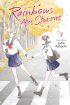
Rainbows After Storms, Vol. 7 | By Luka Kobachi | Viz Media – After the lead couple have had their big fight and resolved everything, it’s time to resolve the other big outstanding subplot, and that’s Mai’s one-sided love. As you’d expect, she loves Nanoha but doesn’t want to break up a couple so is content to bury her feelings forever (and rejoin the basketball team). Chidori’s not having that, and urges her to confess and get rejected because in the end she’ll regret it less. Which is true. So she does, and she is. But hey, maybe she can find a second love with the manager of the basketball team. As for Nanoha and Chidori, they worry they’re too obvious, so dial it back at school—well, try to. Nanoha’s a bit bad at that. We even get the return of “we’re dating, but it’s a secret.” We know. Everyone knows. – Sean Gaffney

This Monster Wants to Eat Me, Vol. 5 | By Sai Naekawa | Yen Press – The anime has aired since the fourth volume came out seven months ago, and so I was a bit spoiled as to what was going to happen. But yeah, there are plot guns being fired here, as we finally get the skinny on the whole “you’re just so tasty and I can’t wait to eat you” from Shiori, and while the first part may be true in general the second part is absolutely not. More to the point, Miko is really standing out as the only sensible person in a manga filled with people making bad decisions. That said, Hinako is the one suffering the most here, and we get one of the best partial title drops I’ve ever seen in a manga. Unfortunately, I get the feeling this may tip the suicide ideation over into actual suicide. We’ll see next time, but boy this is well-written and dark. – Sean Gaffney

[syndicated profile] mangabookshelf_feed

Posted by Sean Gaffney

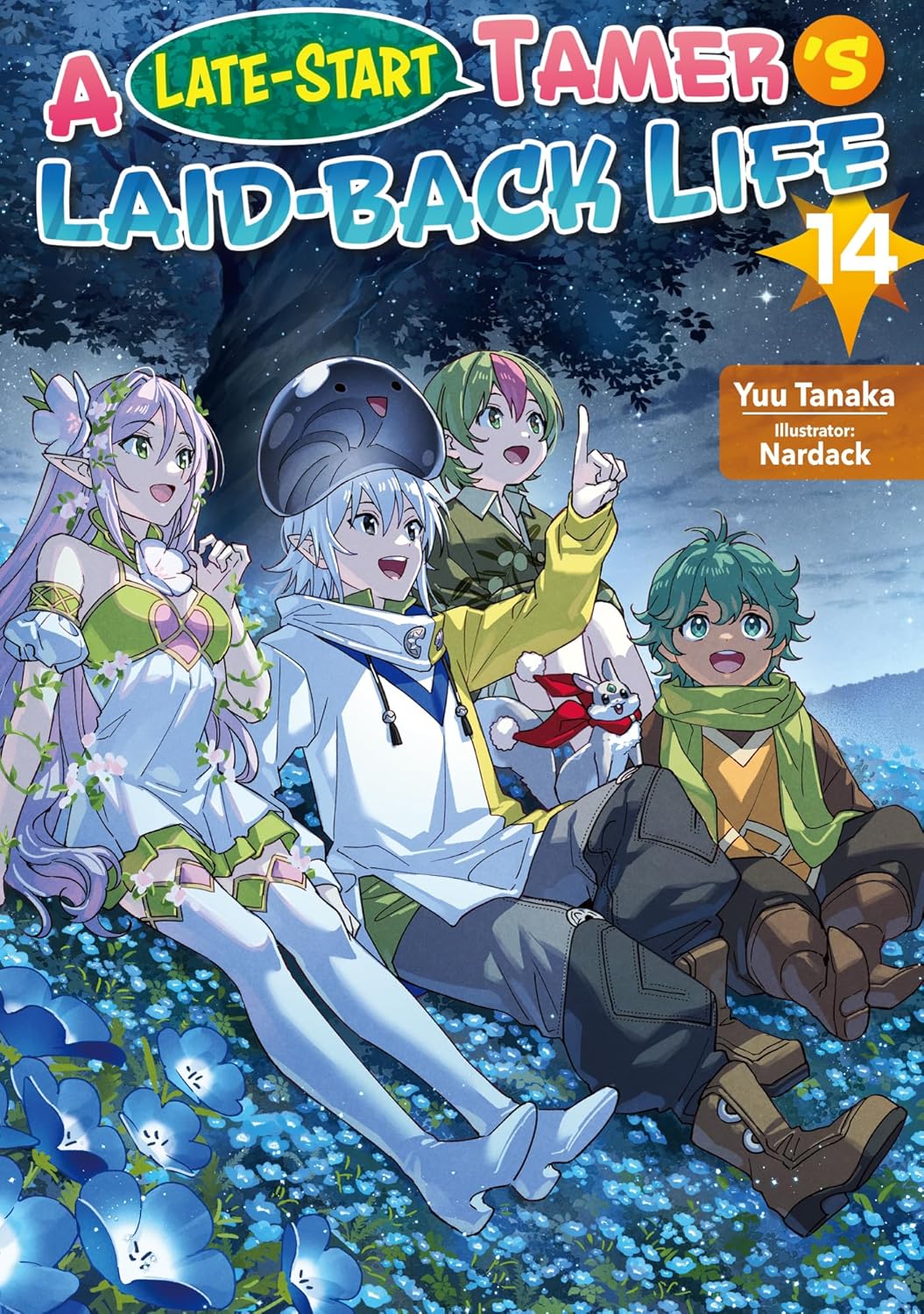
By Yuu Tanaka and Nardack. Released in Japan as “Deokure Tamer no Sono Higurashi” by GC Novels. Released in North America by J-Novel Club. Translated by A.M. Cola.

Another day, another attempt to squeeze 500 words out of “Yuto sure is a main character”. I’ve even compared it to Bofuri before, but the obvious comparison comes up again here. The designers of the game suddenly find that Yuto has done several random things that, when taken together, accidentally open up a boss battle well before they’re ready for it, so they have to make the boss more powerful, then they have to also give the players an out so that they don’t get too discouraged. Unfortunately, due to the nature of the help they give, and where the event takes place, and the connection means that guess who saves the day and gets the biggest bonus? Honestly, it’s a good thing that everyone adores Silver-Haired (some a bit too much), because they’re right, this game’s balance is always in danger of collapsing. Sorry about your daughter, my technician guy, it’s probably doomed. On the bright side, Yuto isn’t eating poison… yet. And romance is unlikely to be even one-sided here.

Yuto has always done things his own way, sometimes deciding to just relax and take it easy, so it should not be a surprise that he finds an area where he can literally weaponize being “chill”. (Later, he finds another one for being “rowdy”, with opposite yet comparable skill sets.) This allows him to do what he does best, which is make friends with NPCs, do things that make you smile, and then suddenly find he’s actually unlocked the key to the universe again. Then he’s asked by his friend Hamakaze (who seems like the sort of person who’s an overly stressed class president in the real world) to help her defeat some yokai… which ends up getting him more cute monsters. That he can play with in his new additions to his house, or take out on monster hunting quests, or break Alyssa’s mind again.

I do appreciate how we get the standard Alyssa breakdown here, but we’re also dragging in her co-worker… whose name, possibly deliberately, is Maple. It doesn’t matter who he tells, because he lacks the gamer common sense that everyone else has. This actually leads to the funniest joke in the book, where, during the final boss battle, he sees some of his weirder friends going all out, and asks Hamakaze if the more eccentric players are more powerful. She stares at him like he’s in The Office, and I get it. Yuto being oblivious to his own eccentricity is great. But it also underscores the other point of this series (and Bofuri), which is that there’s no way to play a game wrong. Just do what you want to do. Well, provided the designers agree with you. We do see in this volume that the folks who invented a game to be the complete opposite of this one bombed badly.

This series is in no danger of ending, and in no danger of having character development I could talk about. It is what it is. Relaxing fun.

[syndicated profile] mangabookshelf_feed

Posted by Sean Gaffney

By Ageha Sakura and Kurodeko. Released in Japan as “Imokusa Reijou desu ga Akuyaku Reisoku wo Tasuketara Kiniiraremashita” by Overlap Novels f. Released in North America by J-Novel Heart. Translated by Vasileios Mousikidis.

This series continues to be pleasant. It has a nice cast, and after the drama of the last book, I was expecting a more lackadaisical one. That said, I’m starting to feel like Agnes does through most of this volume. I wish that the book would stop coddling me and actually go places. It’s been very clear for a while now that the author’s idea for the way the series goes began and ended with the first book. This is quite common with light novels, where the publisher says “It sold, write more”, and the author says “more what?”. I was wondering if the series might end with Agnes giving birth to her child, but no, that’s the beginning of this book, and it ends up going so smoothly and easily even Agnes is surprised. Worst of all, the author is aware that there is a certain lack of conflict in this volume, and brings back the series’ worst villain, Robin. Who is still the worst.

Six volumes in and we’re no closer to figuring out why the cover art always has a little chibi-Agnes floating around. I had wondered if it might be their future child, but no, Agnes gives birth to a healthy baby boy, named Solis. What’s more, not only does he have rare soil magic, but he’s seemingly been able to use it from inside the womb, as it turns out that was the reason behind Agnes’ magic soil powers in the last volume. That’s not to say she doesn’t do a lot of Cool Magic Tricks here, including essentially putting up a dome to protect the entire estate from a nasty storm. Unfortunately, Robin has escaped from his light novel stereotypes prison, and is helped out by an apathetic, aggrieved man from another country. They’re supposed to flee to that country, but Robin can’t help going to Sutrena to try to make Nazel’s life miserable.

To get the bad stuff out of the way, I hate Robin. I know that’s deliberate, but I hate how he’s written too. It’s interesting that one of the funnier things in the book was how Agnes got Robin to stop being obsessed with her – she put her old pancake makeup from Lady Bumpkin days back on. But yeah, Robin is stupid, arrogant, and terrible, and him being put back in prison also means we get a lot more “hah, it’s funny because prisons have lots of gay rape!” bits. On the bright side, I quite liked the aggreived foreign aide, who seems to realize that he’s on a mission where everyone will abandon him when it goes wrong, and when it does, he’s absolutely right. Fortunately, he’s in this series, so it turns out his magic is far more amazing than he expected. Also, because he’s in this series, Agnes wins him over with the sheer power of niceness, though he doesn’t fall for her.

So yeah, I’m basically reading this series on inertia, but I still want to read more, unlike her other JNC series I dropped recently. And we may get another child soon, if Nazel’s behavior at the end of this volume means anything. For fans of series with chibi-versions of the protagonist floating in the air for no reason.

[syndicated profile] mangabookshelf_feed

Posted by Sean Gaffney

By Fire head and KeG. Released in Japan as “Kaketa Tsuki no Mercedes: Kyūketsuki no Kizoku ni Tensei Shita kedo Suteraresō nanode Dungeon wo Seiha suru” by TO Books. Released in North America by J-Novel Club. Translated by Maddy Willette.

I do love it when a character I 100% vibe with arrives on the scene. I love, as I have said in a few reviews before, incredibly strong, powerful women who are also dumb as a bag of hammers. It just tickles me. And we get that in spades here with Julia, a vampire who’s on the side of the bad guys and actually forces Mercedes to try. See, she’s not only strong, but it seems to be entirely instinctual – she hasn’t been taught anything, but when she sees a move she’s able to work out counters and the like just on her own. And she’s also the funny kind of dumb, which is important. She will fall for them pretending to be on her side and spill all sorts of secrets. The big bad, when their plans inevitably go south, assumes it’s her fault simply because she causes chaos wherever she is. I was so happy she wasn’t killed off.

Things are going pretty well for Mercedes, though she’s still struggling with the whole succession thing. Unfortunately, Sieglinde may be the official princess, but the country does not really want her to rule, especially since the empire next door were all misandrists. So she’s got to get married, and the person who marries her will have all the power. Then Mercedes gets a visit from a guy named Basil, who she notes looks exactly like a typical anime bad guy (he looks a lot like Gin from Bleach, in fact). Basil says that there is, in fact, another royal with a claim to the throne – and he has a dungeon. Sure, he’s a naive ten-year-old who is clearly being set up as a puppet king, but that’s irrelevant – he has a dungeon, and he’s male. How are they going to handle this?

As it turns out, the backstory that led to all this turns out to be rather convoluted, especially since it means that there’s another person with a connection to the royal family. My favorite part of the book was possibly Mercedes’ unreliable narrator moment. To be fair, it’s not without signposts – there are several points where she notes that she’s being too kind or too soft, and we think “wait, back up, Mercedes? Too soft?”. But her father clocks her right away, and instantly lays out her entire thought pattern in three paragraphs. It’s very clear that whenever this series ends (I’m estimating 1 or 2 more books), it’s going to end with Mercedes battling her father for supremacy. In the meantime, congratulations to the country, which now has its royal who can be king, and he’s at least semi-competent. Oh yes, and the little boy who was being manipulated is not killed but put in prison instead. I’m sure that will be FINE.

The 5th volume is not out yet, so get ready to wait. This is a decent little OP cynical vampire series, even if I could have done without hearing about how vampire’s breasts never sag because of their eternal youth (or, in the case of Mercedes, eternal tweenhood).

[syndicated profile] henryjenkins_feed

Posted by Art Tavana

This contribution is part of a series of posts on genre and the ‘global shuffle’. This post contains sensitive language.

I've never seen the Ramones live. I’ve only heard the stories of four leather-clad nerds who played harder and faster than any band in recorded history. Henry Rollins said they sounded like “musical assault.” Nobody sounded quite like this prior to 1974; the year the Ramones made their debut at club CBGBs in New York. The Ramons played fast, didn’t talk much, and wrote songs that evoked Nazi imagery, teen violence, and self-harm. They rejected the hedonistic cock-rockism of bands like Led Zeppelin and The Rolling Stones. The Ramones were angry nerds, which is why the “cock rock” purists at Rolling Stone and NME said they were “dumb,” “unoriginal,” and “repetitive.” One reviewer described the Ramones as “the sound of 10,000 toilets flushing.” The Ramones responded to the critics with what Michael Enright called “cartoonish violence and ironic posturing.” Guitarist Johnny Ramone strapped booster rockets to the rhythm and blues and launched it from CBGBs up toward Rolling Stone headquarters in midtown; Joey Ramone crooned about teenage lobotomies, sniffing glue, and what The Queers later described as “love songs for the retarded.” When the Ramones appeared as cartoons on the cover of Road to Ruin (1978), the critics called it “juvenile” and “camp,” but the Ramones were mocking the self-seriousness of ‘70s hard rock, and they were serious about it (purposefully blending the lines between Hanna-Barbera cartoons and genre violence).

Kill Bill

“For me, punk is about real feelings,” Joey Ramone said. The Ramones moved bodies with down-stroking guitars, love songs, cartoon violence, and angry nerd shit that felt, at the time, revolutionary. The Ramones were progenitors of what film scholar Linda Williams described as “body genres” that activate visceral reactions. But cinema, we’re told, is not supposed to move bodies like the mosh pit at CBGBs. “Gratuitous” spectacles cause you to cheer or stomp your feet, not cinema. Williams challenged this sort of high art snobbery in her 1991 essay “Film Bodies: Gender, Genre, and Excess,” arguing that genres like horror and porn deliberately produce bodily responses (e.g., physical jolts or gasps). Film spectatorship, for Williams, was not a disembodied experience. Williams graffitied across the accepted narratives of film scholarship a decade before Tarantino released Kill Bill Vol. 1 (2003), his fastest and most “gratuitously” violent body genre film, and one of the punkest films of the 2000s; nothing before or after has matched its blend of velocity and cartoonish rage (the product of a director who sat atop the angry-male nerd kingdom of weebs). Kill Bill Vol. 2 (2004), released six months after the original, was, by comparison, a much more mature and methodically paced melodrama with Tarantino complicating The Bride’s trauma and her relationship to Bill, the man who attempted to kill her (and their baby). In the first film, The Bride’s trauma is unleashed with pornographic levels of rage—never complicating or interrogating The Bride’s vengeful wrath the way Vol. 2 does. Vol. 1 is a much more Japanese film (this will be explained).

In terms of average shot length, Kill Bill Vol. 1’s snap zooms and rapid cuts ditch long hangout scenes and extended verbal sparring in films like Reservoir Dogs (1992) and Pulp Fiction (1994). In contrast to the dialogue density of Kill Bill Vol. 2, Vol. 1 is more kinetic and physical—a visual feast that bursts into gustatory sizzles, cracks, and bone-crunching splatterpunk excess. Vol. 1 is a lean-as-fuck hour and fifty-one minutes of sushied, slice-and-dice movement and sound (Vol. 2 is 26 minutes longer and much less frenetic). Kill Bill Vol. 1 dragged the audience into the mosh pit and sprayed us with blood.

I saw Kill Bill Vol. 1 on opening day: October 10, 2003. I was 18. I practically shrieked when The Bride (Uma Thurman cross-dressing as Bruce Lee) whooshed her blade through bodies that squirted, sprayed, and spouted pornographic amounts of blood. It was, for my brain-rotted millennial gamer brain, the most hilariously transgressive shit I’d ever seen that was not a video game. Blood literally erupted from the decapitated stumps of Japanese Yakuza men. It was phallic and perverse. I won’t psychoanalyze the vulgar glory of blood launching into the air through exploding Chinese condoms (a Hong Kong cinema special effect), but it caused my body to jolt. I chuckled nervously, at first, looking around to see if I was alone; faces flickered with spatters of red and yellow, but nobody was moving. The theater was in a post-9/11 “War on Terror” daze of fear and anxiety, except for a group of teenage weebs who looked like they’d spent the past 14-hours playing Grand Theft Auto purely for the lulz. The rest of the audience looked like sterile and catatonic. The weebs, my fellow Tarantino-heads, were giggling their asses off. I joined them like we were front row at a pro wrestling match in Japan watching Akira Hokuto surgically slice open her forehead with a razorblade. They didn’t see me, but we moved our bodies together. It was mimetic. It was charged. We were moshing our bodies together.

“[W]hat may especially mark these body genres as low,” writes Williams, “is the perception that the body of the spectator is caught up in an almost involuntary mimicry of the emotion or sensation of the body on the screen.” Warm blood flowed through my neck and engulfed my face. I jerked my legs forward and kicked the seat in front of me—not caring about the person sitting in it. The sheer volume of blood was honestly kind of astounding. It felt like a new genre of revenge porn, and for the record, it was. Tarantino was staging a beatdown of the critics who labeled him a “racist anti-racist” and accused him of appropriating cultures (and other directors). They said he was “dumb” and “unoriginal.” These were the same critics who’d previously dragged Tarantino for sadism, homophobia, misogyny, and for his “gratuitous” use of the N-word. Director Spike Lee noted the number of times the N-word was used in Jackie Brown (38 times). In the September 1996 issue of Premiere, writer and self-identified “snoot” David Foster Wallace described Tarantino’s violence as a commercialized, low-culture Lynch who did to Lynchian violence what Pat Boone did to the rhythm and blues: “homogenize it, churn it until it's smooth and cool and hygienic enough for mass consumption.” This was the same logic critics used to delegitimize the Ramones for “appropriating” the rhythm and blues.

This is not not true. Johnny Ramone was technically just playing sped-up Chuck Berry riffs—Chuck Berry but dumber, whiter, and angrier. Tarantino poached from Italian and Japanese genre movies and made it more American (i.e., dumber). This is punk. Why is this punk? It’s always easier to define what punk’s not versus what punk is, but punk tends to sound “revisionist” and “dumb” to the people who aren’t punk. Tarantino turned Shaw Brothers kung-fu into sped-up Chuck Berry riffs. Tarantino’s favorite mainstream film critic, Pauline Kael, described Pulp Fiction (1994), his second film, as a film with “no serious undercurrents.” I read this two ways: (1) Pulp Fiction isn’t very deep, and (2) Tarantino is punker than David Lynch. Not everyone agreed. Film critic Jan Wahl called Tarantino’s violence as “soulless,” questioning his use of “gruesome, graphic violence,” to which Tarantino responded on behalf of all his fans, “Because it’s so much fun, Jan, get it?!?!”

Vol. 1 is, in its most stripped-down form, a joyfully punk distillation of Tarantino’s core gestures as a filmmaker: excess, repetition, pastiche, exploitation, and provocation, like Marcel Duchamp drawing a mustache on the Mona Lisa or Bart Simpson launching a paper plane into his teacher’s “tiny skull-sized kingdom,” to quote David Foster Wallace, who famously opined that “Quentin Tarantino is interested in watching somebody's ear getting cut off; David Lynch is interested in the ear.” DFW meant, I think, that Lynch’s severed ear in Blue Velvet (1986) was a metaphor—deeper, in his view, than the ear in Reservoir Dogs, which was just cartilage and blood. But Tarantino’s violence was commenting on itself. It was dumb, and that was the point. But Tarantino purposefully soundtracking Mr. Blonde’s ear-slicing with a Dylan-esque pop song was cartooning his violence. It was an intentional juxtaposition that was not quite “camp,” and Tarantino amplified the juxtaposition to Maxell-levels on Kill Bill Vol. 1, producing what Kenneth Turan at the LA Times described as the “most graphically violent film ever made by a mainstream American company.”

Tarantino’s riotously punk ethos flies slightly off the handles in his view that Kill Bill Vol. 1 is a movie that…children can enjoy. This is a provocation, for sure, but an earnest one—a generational one. Tarantino was 11 when he saw Sam Peckinpah’s The Wild Bunch (1969), which was, at the time, one of the most violent movies ever made. Tarantino was raised by a “swinging” single white woman who dated black athletes—a feminist, for her time. Jan Wahl was a different genre of feminist when she confronted Tarantino’s on national TV: “I’d like to see you walk down the street and get attacked by some kids who’ve just seen your movie.” Tarantino responded with a punk-rock snarl: “All the movies that I’m basing my movies on are the movies I saw as a kid, and kids go to a movie theater, and they can tell the difference. Maybe you couldn’t when you were a kid, but I could.”

One of the defining characteristics of Tarantinian punk is how he collapses the distinctions between youth, sex, violence, and gender norms (e.g., Uma Thurman as Bruce Lee, castrating the critical mass). This is why teenage boys (and weebs) worship Tarantino: he satiates their basest desires and does not apologize for it. It’s liberating. It’s what a mainstream Hollywood filmmaker should do: feed his audience and starve his critics. When I discovered Tarantino as a teenage boy, I was borderline aroused. His perversions (e.g., severed ears and bad words) made me feel something physical and grotesquely primal. I also felt like I was watching Saturday morning cartoons in my milk-stained pajamas. Tarantino and his fans, I include myself in this group, are fundamentalist about three things: 1) Violence is fun 2) Words are not violence 3) Kids can watch violent movies. Tarantino communicates this with the first instance of red blood splatter in Kill Bill Vol. 1, which appears inside Vernita Green’s suburban home as a bloody fingerpainting hung on kitchen walls where you’d normally see something cute and cozy—the portrait of a child with the family dog, for example. For Tarantino, extreme violence is not unsafe for children because children can differentiate between real violence, performative violence, and cartoon violence, e.g., a blood-stained fingerpainting.

Allow me to wax parental for a sec: juvenile delinquency is, at least I think so, a response to prepubescent trauma, e.g., seeing your parents brutally murdered in front of you by a psychotic assassin. Kill Bill Vol. 1 flashes back to O-Ren Ishii exacting revenge of the man who killed her parents in such a way, which Tarantino unleashes into bursts of animated gore and gunfire—the most belligerently juvie-punk sequence in the film. Punk, for Tarantino (and the Ramones) is coded in the primal desire to splash your high school bully’s blood across their PE locker. Vol. 1’s “mini boss,” Gogo Yubari (O-Ren’s bodyguard), is a Japanese schoolgirl who swings a chain mace and titters uncontrollably and sadistically. Gogo is a deliberate paring of kawaii culture with punk nihilism. In a flashback, we see Gogo guzzling cold sake before disemboweling a predatory Japanese pervert—a businessmen with a hard-on for teenage girls. I laughed uncontrollably as the businessman’s guts poured down Gogo’s legs, staining her white tennis shoes as a visual representation of innocence, violence, and sex. Gogo is a Japanese Sex Pistol—what UK punk impresario Malcolm McLaren described as a “sexy young assassin”—a mid-2000s collage of Japanese sadism (e.g., Takako Chigusa in Battle Royale, 2000), “Hit Me Baby One More Time”-era Britney Spears, manga, and UK punk. The weebs were obsessed. Tarantino supercharges these tendencies with Vol. 1’s Crazy 88 climax. The sequence opens with The Bride standing legs apart at the center of a glass pit. She is surrounded by masked yakuza. She draws her Hanzō sword and swings at a yakuza who cries with exaggerated agony, like a pre-recorded laugh track: “Aah! Aah! Aah!” Three yakuza swoop in from behind as The Bride leans back and draws her blade across their chests. Blood sprays across the glass like abstract expressionist paint. Another yakuza hurdles forward; The Bride pinches his eyeball and snatches it out of his skull. I winced. The teenage weebs looked like they were on a rollercoaster drop. When The Bride grabbed a yakuza and spanked him with her sword, ordering him to go home to his mother, everyone in the theater lolled. It felt like a Three Stooges bit. It was not “camp.” It was purposefully vaudeville. It was Moe poking Curly in the eye and slapping-the-shit out of him on repeat.

The juxtaposition of extreme violence and slapstick in Vol. 1 produced pain (tension) and pleasure (release). This is repeated on loop by Tarantino like the mechanics of a hack-and-slash video game. Vol. 1 was Tarantino feeding us a looping, staccato cadence of dismembered limbs, gore, and genre signifiers, e.g., Lady Snowblood (1973). But the true joy was found in Tarantino’s uninhibited violence, not his genre references. And for the record, Tarantino’s violence is never camp. It’s slapstick, exaggerated, and intentional—never in quotation marks (to “quote” Susan Sontag). Tarantino is totally earnest in his desire to puncture and release along a cathartic loop of swooshes, bangs, and aahs. Whether body genres can be camp or not is a point of debate but hear me out: camp generates aesthetic and ironic distance; body genres, on the other hand, draw the viewer closer and confront them. Body genres are in your face and relentless, like drowning in a mosh pit and trying to claw your way out (except you like the feeling). I felt like this when The Bride somersaulted into the air and swung her sword down into a yakuza’s skull—literally slicing him in half like a hot knife through butter. “I want to suggest that the success of these genres [body genres] is measured by the degree to which the audience sensation mimics what is seen on the screen,” writes Williams. Tarantino was referencing Ichi the Killer (2001)—where a yakuza gets cut in half—but I didn’t know that. I also didn’t know that Johnny Ramone was playing sped-up Chuck Berry riffs until years later. I just liked that Johnny played hard and fast with a warrior-like desire for regimentation and repetition. A one-woman killing machine cutting a man in half didn’t need to be interrogated; it needed to be felt, like Johnny’s riffs. It needed to make you cringe, scream, laugh. No film in history has brought its audience closer to gigglegasming than Kill Bill Vol. 1. Also, body genres, according to Williams, often center the female body in the spectatorial experience of pain and pleasure, inviting both a male and female gaze—blending elements of feminism and post-feminism. From Tarantino’s POV, this is partially why he referred to Vol. 1 was an empowering feminist statement—a “girl power” movie.

Stepping over puddles of blood, The Bride enters a freshly snowed Japanese garden. The tonal shift reorients us toward the elegance of O-Ren Ishii (Lucy Liu) in a white kimono, as she slowly unsheathes her katana and an ambient water fountain lulls our senses. There’s a slight pause before Tarantino plays a disco cover of The Animals’ “Don’t Let Me Be Misunderstood.” Moments later, a streak of blood cuts across the snow like an exclamation mark. The next sentence is a schoolyard diss: “Silly Caucasian girls like to play with samurai swords,” says O-Ren, as the two assassins clash swords and intersect cultural and generic identities in way that is quintessentially Tarantino. The action slows. Something resembling a maimed raccoon zooms across the screen. It lands on the snow. The camera pans up to reveal O-Ren’s exposed brain. I gasped as a catatonic O-Ren commented on the quality of the blade that just scalped her: “It was truly a Hanzō sword.” She’s a real-life cartoon, like Mr. Blonde conversing with a severed ear or Joey Ramone singing about teens wanting to be lobotomized.

Vol. 2, released about six months later with a completely unique marketing campaign, was more character-driven and significantly less bloody. Bill’s death scene in Vol. 2 is bloodless and quiet (the result of Pai Mei’s Five-Point Exploding Heart Technique). Vol. 2 has more prolonged dialogue scenes and introspection in desert landscapes—very Americana. It is composed with natural palettes and lighting that situate the viewer in the natural world. Vol. 1 is a high-contrast kinetic gore-fest that moves with the elasticity of Japanese anime and hack-and-slash, button-mashing PS2 games. Vol. 2 delves into the psychology of The Bride’s revenge arc. It’s a melodramatic body genre film that flickers with punk rebellion, like early Rolling Stones, but it’s not punk. Tarantino views Kill Bill as a single experience, The Whole Bloody Affair. I do not. These are two films with distinct visual and tonal identities. It’s Americana vs. Japanese exploitation. That is how they were first experienced by audiences in the mid-2000s, and no amount of film editing can alter history (don’t quote me on that).

Still, Vol. 1 is the personification of punk as a cinematic expression—a visual assault on the brain, but especially the body; it is generically more Japanese exploitation than Spaghettini Western—the genre anchor of the second film. For those of you who weren’t there in 2003, like those of us who weren’t there in 1974, there was nothing quite like the angry full-frontal slapstick of Kill Bill Vol. 1; it remains Tarantino’s punkest manifestation of all the things that make him problematic for his critics and so much fun for his audience. Punk, for me, is giving the people what they want and denying the critics what they want for us—what they consider “cinemavs. “trash.” Vol. 2 is, in many ways, though not quite sonically, more of a vibe-based post-punk film that was more critically praised than the original, i.e., not as fun.

Biography

Art Tavana is an award-winning journalist and author of Goodbye, Guns N’ Roses (ECW Press). His byline has appeared in VICEPitchforkSpinBillboard, ConsequenceL.A. WeeklyHelloGigglesThe Village VoiceThe A.V. Club, Playboy, Penthouse, USA Today, and The Hollywood Reporter. Art’s writing has been cited in works by major literary and cultural figures, including Bret Easton Ellis’s White and Pam Houston’s Without Exception: Reclaiming Abortion, Personhood, and Freedom.

Manga the Week of 2/25/26

Feb. 20th, 2026 12:11 am
[syndicated profile] mangabookshelf_feed

Posted by Sean Gaffney

SEAN: As February draws to a close, what manga does it bring us?

ASH: Let’s find out!

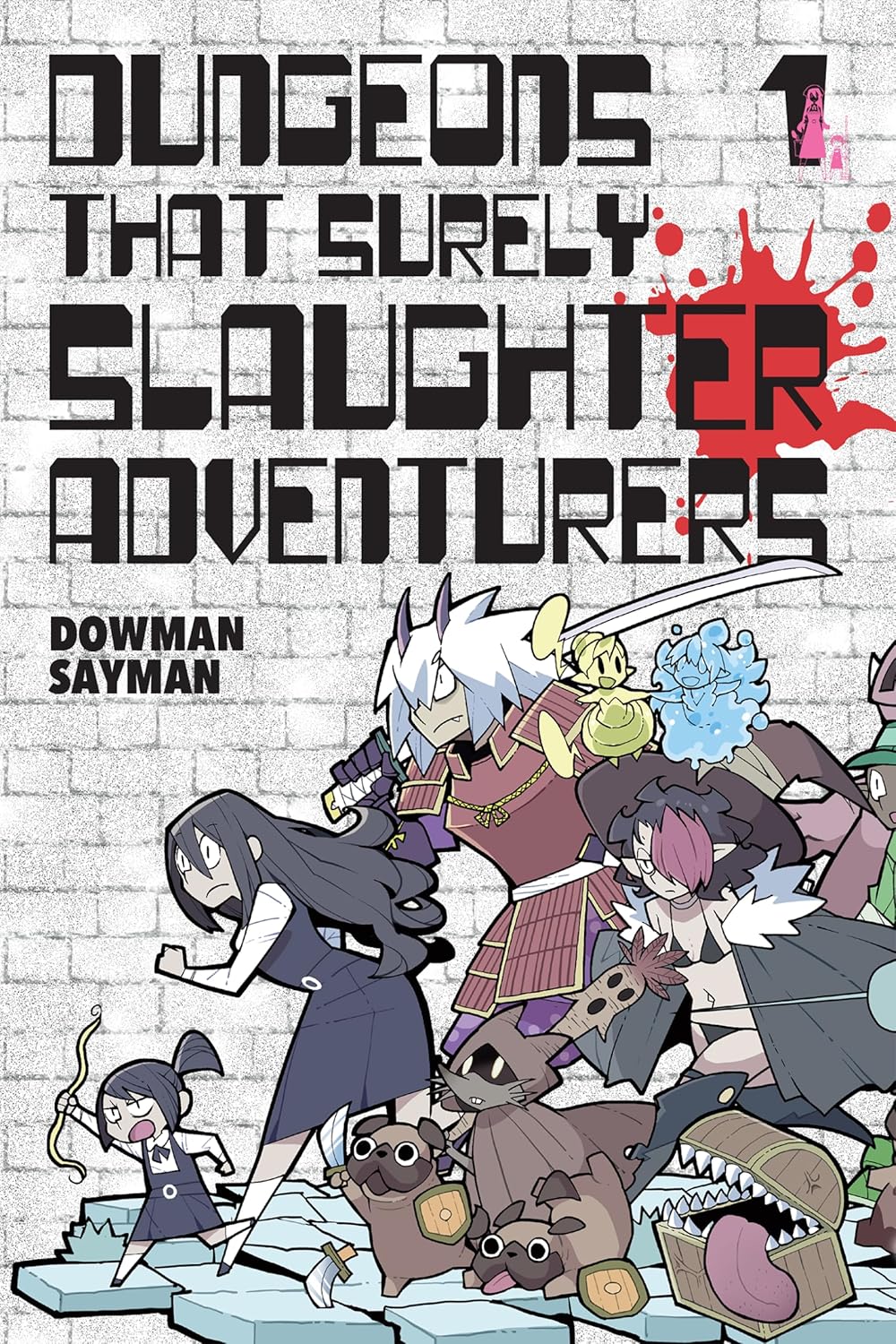
SEAN: Yen Press debuts Dungeons That Surely Slaughter Adventurers (Boukensha Zettai Korosu Dungeon), a Web Comic Apanda title from the creator of Voynich Hotel. Two people reincarnated as dungeon staff are annoyed that everyone else got to be reincarnated as adventurers… so they make the dungeons even harder, to kill them all!

ASH: I remember enjoying Voynich Hotel and as far as reincarnation premises go, I am amused by this one.

SEAN: The Fake Alchemist (Nisemono no Renkinjutsushi) is a Kadocomi title about a guy trying to get by after being isekai’d by being an alchemist… but he’s cheating!

ASH: That usually leads to trouble.

SEAN: The Idol’s Escape (Idol Escape) is a 2-in-1 omnibus with the entire series, which ran in Comic Beam. A gay man who wishes he could be as put together as his favorite idol winds up helping her escape from an abusive producer.

ASH: I wish them both the best!

SEAN: Keyaki Shopping District’s Sakura Bathhouse (Keyaki Shoutengai Sakura no Yu) is a BL title from Gene Pixiv. An outgoing high schooler accidentally injures a tough guy, and says he’ll do anything to make up for it. Now he’s… working at a bathhouse?

ASH: Hmmm.

SEAN: Mad Miniscape is Dengeki Maoh title. A girl lives in an apartment with her childhood friend… who is dead. And evil. And wants to take her life. But as long as he’s THERE, that’s fine.

ASH: We all have our issues to deal with.

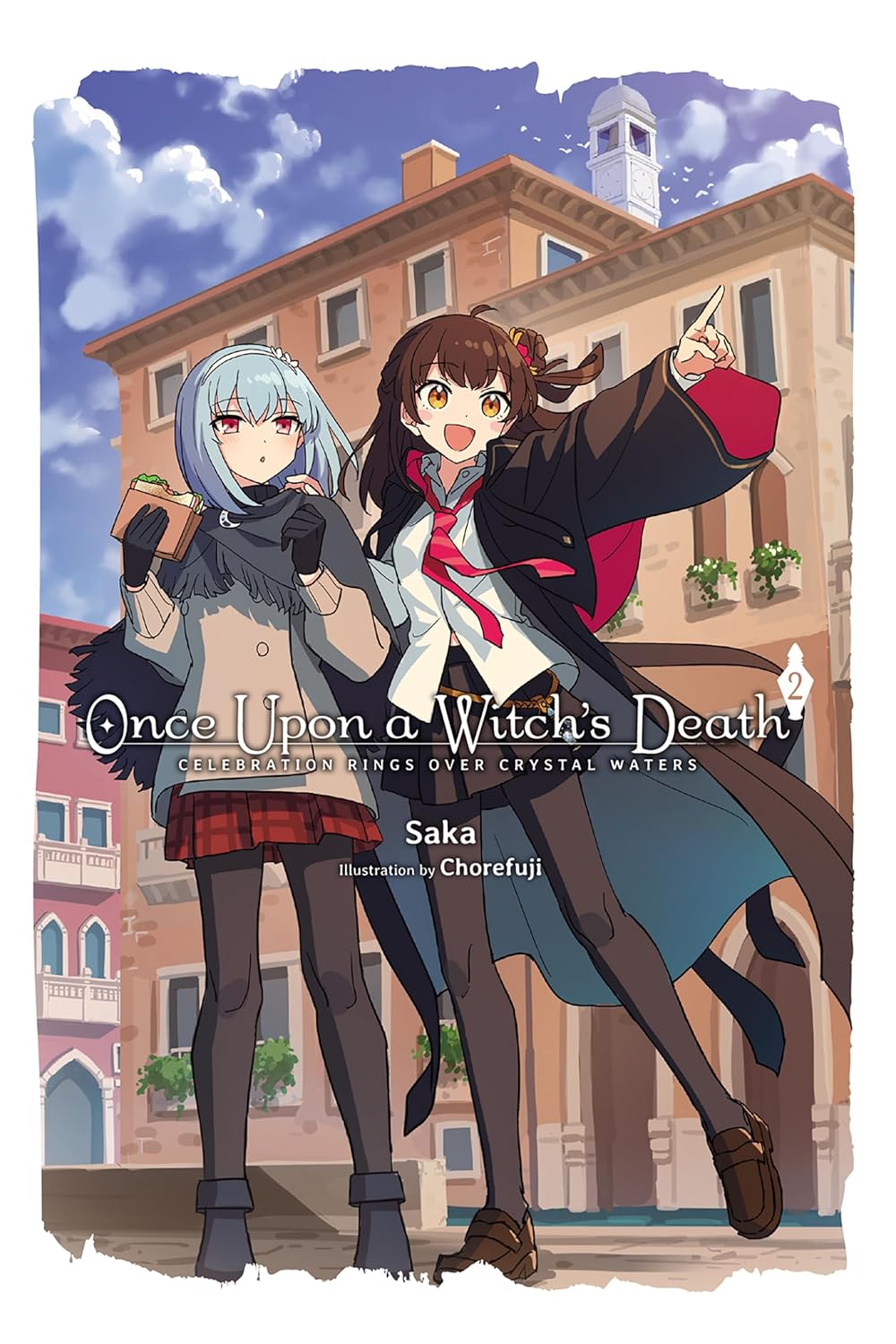
SEAN: Once Upon a Witch’s Death: The Tale of the One Thousand Tears of Joy (Aru Majo ga Shinu made: Owari no Kotoba to Hajimari no Namida) is the manga adaptation of the light novel Yen also puts out, which also has a recent anime. Meg Raspberry may be cursed to have a year to live, but she won’t let that stop her living a full life! This runs in Dengeki Comic Regulus.

[OSHI NO KO] TV Anime 1st Season Official Guidebook: First Report is exactly what it sounds like.

Also out next week from Yen Press: Almark 2, April Showers Bring May Flowers 4, The Beginning After the End 10, Brunhild the Dragonslayer 4 (the final volume), Bungo Stray Dogs: The Official Comic Anthology 5, Cheeky Brat 16, D.N.Angel New Edition 2, Daughter of the Emperor 13 (the final volume?), The Ephemeral Scenes of Setsuna’s Journey 2, The Failure at God School 3, Futari Switch 2, I’m a Behemoth, an S-Ranked Monster, but Mistaken for a Cat, I Live as an Elf Girl’s Pet 12, Imitation 8, In Another World, My Sister Stole My Name 4, In the Land of Leadale 7, Is It Wrong to Try to Pick Up Girls in a Dungeon? On the Side: Sword Oratoria 27, Konosuba: God’s Blessing on This Wonderful World! 20, Laid-Back Camp 17, The Magical Revolution of the Reincarnated Princess and the Genius Young Lady 7, Mechanical Marie 2, Murciélago 26, Nomi x Shiba 3, Please Put Them On, Takamine-san 10, The Shiunji Family Children 5, Shy 12, Slasher Maidens 13, Spring Storm and Monster 5, The War of Greedy Witches 4, The World’s Finest Assassin Gets Reincarnated in Another World as an Aristocrat 8, and Übel Blatt Deluxe Edition 5.

ANNA: Could that be….too much manga????

ASH: I had to scroll much longer than I was anticipating.

SEAN: Viz Media has Cosmos 4 and Insomniacs After School 13.

Udon Entertainment supposedly has Vol. 3 and 4 of Veil. Take that with a grain of salt.

ANNA: I want to believe!!!!

ASH: It would be great to see!

SEAN: Tokyopop has the 4th volume of We Can’t Do Just Plain Love.

Steamship has His Sensual Whisper: The Voice That Sets Me On Fire 2 and Winter Wolf 2.

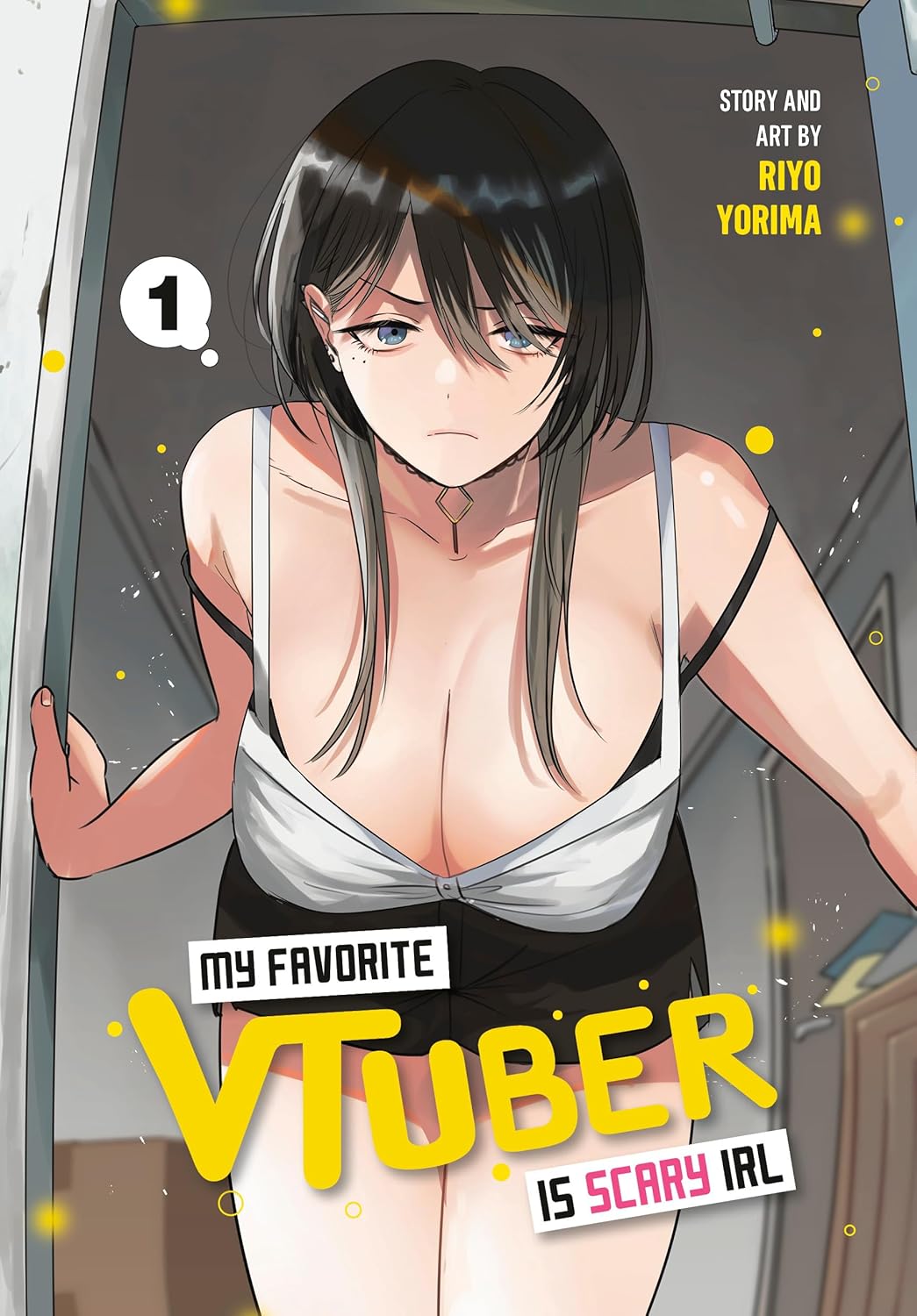
Square Enix Manga debuts My Favorite VTuber Is Scary IRL (Haitatsusaki no Onee-san ga Kowasugiru), a classic “shy boy meets the girl of his dreams” manga. It’s on Gangan Online.

Seven Seas has one danmei, Mistakenly Saving the Villain 3.

They also debut Kitayama and Minamiya (Kitayama-kun to Minamiya-kun), a spicy BL comedy about a guy who can always picture what someone looks like when they’re aroused… except this one guy. It runs, appropriately, in Splush.

MICHELLE: Snerk. Wow.

ANNA: What a terrible problem to have!

ASH: It does seem like that could lead to trouble.

SEAN: A Prince of a Friend (Ouji-sama no Tomodachi) is a shonen title from Dra Dra Sharp #. Rui is tired of every girl he likes confessing to his best friend… who is gorgeous, and the school prince. So she offers to teach him the ways of love.

Wait, I Love You (Matte, Suki), which runs in Byou de Wakaru BL, is about an actor and his stylist boyfriend trying to make things work despite their busy careers.

MICHELLE: Potentially interesting!

ANNA: Yeah!

SEAN: Seven Seas also has Cupid is Struck by Lightning 2 (the final volume), The Dangers in My Heart 12, How Do I Turn My Best Friend Into My Girlfriend? 5 (the final volume), Ichi the Killer Omnibus 3, Karate Survivor in Another World 9, Monster Musume: Deluxe Edition 2, My Girlfriend’s Not Here Today 6, Mysterious Disappearances 8, Now That We Draw 4, and Yes, No, or Maybe? 3.

One Peace Books has Detectives These Days Are Crazy 3 and Hero Without a Class 5.

Kodansha Manga has Blue Lock Omnibus 1, which has the first three volumes of this popular soccer series.

ASH: It’s probably time I get around to reading this.

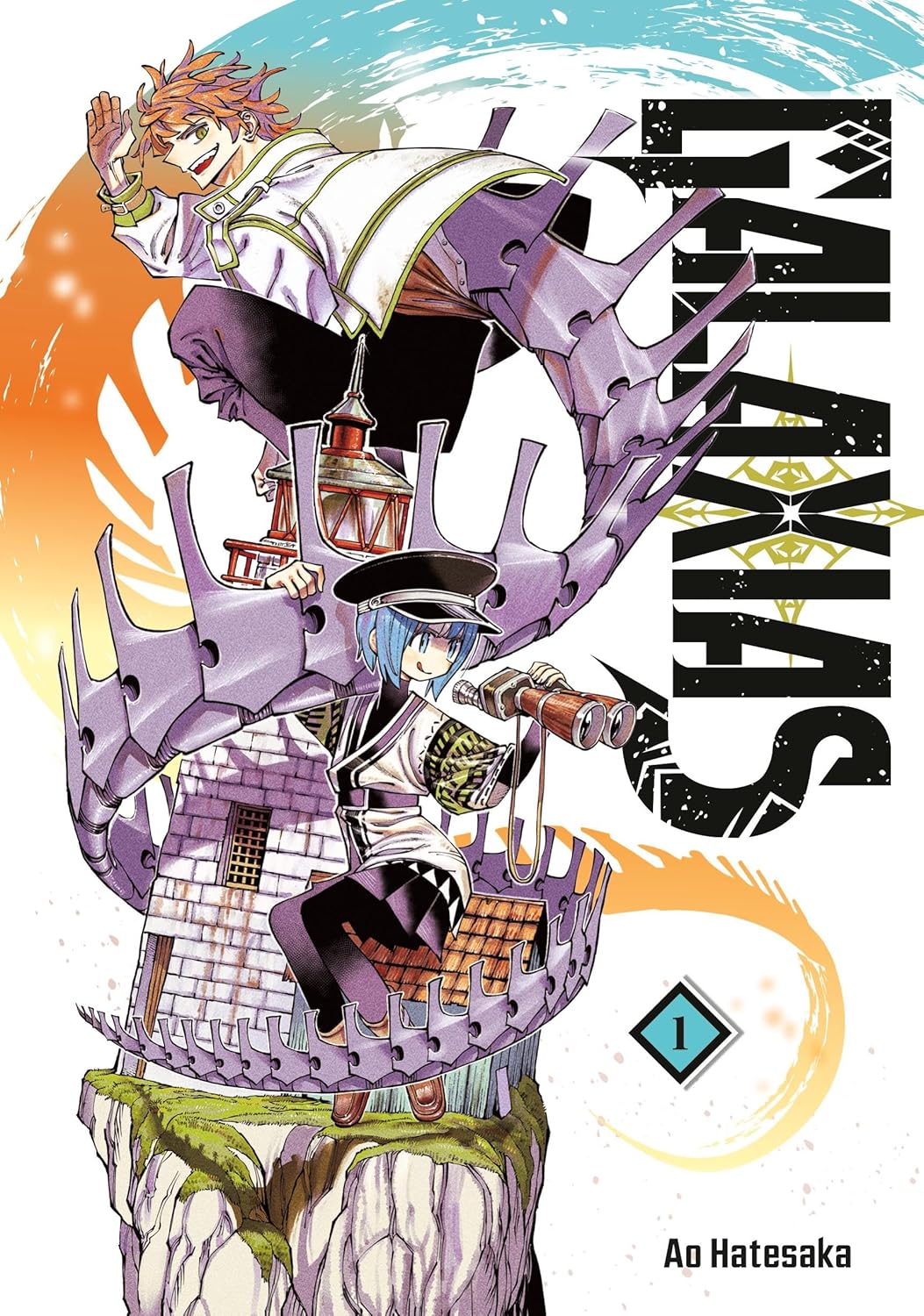
SEAN: GALAXIAS is a Weekly Shonen Magazine title about a girl who finds she knows nothing about this world that her father has kept from her, so sets out on a journey of discovery.

Hitting Rewind With You (Okuremashite Seishun) is a shoujo manga from Dessert. A girl who’s been too busy grinding grades to date decides to go out on Halloween in her old high school uniform… and runs into a handsome high schooler! Only… he’s in college too?!

MICHELLE: I might go for this one!

ANNA: Me too!

SEAN: Also in print: A Curtain Call for You 2, The Darwin Incident 9, I Want to Love You Till Your Dying Day 7, Nina the Starry Bride 14, Rent-a-Girlfriend 35, and You Can’t Bluff the Sharp-Eyed Sister 3.

ANNA: I need to get caught up on Nina the Starry Bride, I do enjoy it.

ASH: I still need to start it. I’m so far behind on so many things.

SEAN: In digital: Am I Actually the Strongest? 16, Fungus and Iron 8, Love, That’s an Understatement 7, Saving Sweets for After-Hours 5 (the final volume), WIND BREAKER 22, and Ya Boy Kongming! 22.

J-Novel Club has one print debut, the manga version of My Quiet Blacksmith Life in Another World. It runs in Kadocomi.

No digital debuts for J-Novel Club. For light novels, they have Cooking with Wild Game 32, Guild Handyman? More like Mastermind! 2, Haibara’s Teenage New Game+ 9, An Introvert’s Hookup Hiccups 12, Knock Yourself Out! The Goddess Beat the Final Boss in the Tutorial, So Now I’m Free to Do Whatever 3, The Misfit of Demon King Academy 11, One Last Hurrah! The Grayed Heroes Explore a Vivid Future 2, and Revenge of the Soul Eater 4.

For manga, there is I Want to Escape from Princess Lessons 6, Imperial Reincarnation 3, The Invincible Summoner Who Crawled Up from Level 1 6, Looks Like a Job for a Maid! 3, My Death-Defying Dog 2, and A Wild Last Boss Appeared! 9.

Hanashi Media has I’m Just a Villager, So What? 3 and Tsukimichi: Moonlit Fantasy 13.

Ghost Ship has a 2nd volume of Virgin Knight: I Became the Frontier Lord in a World Ruled by Women.

Dark Horse Manga debuts Cyberpunk: Edgerunners MADNESS, a spinoff title featuring Pilar and Rebecca that runs in Comic Alive +.

Cross Infinite World has two debuts. Goodbye, Horrible Fiancé, Hello, Fun Magic School Life! (Konyakusha wo Sutetara, Tanoshii Mahou Gakkou no Seikatsu ga Matteimashita) is the first, where after a broken engagement a noblewoman tries enrolling in the obligatory magic academy.

Strawberry Princess: The Time Loop Defying Villainess (Shiitagerareta Maihime wa Seijo no Loop ni Ichigo de Aragau) is a one-shot light novel about an abused princess who’s time-looping… but it’s not her doing it, it’s her evil half-sister trying to get the perfect man! And now she’s set her sights on our heroine’s fiancé! Wait, what do strawberries have to do with this?

ANNA: This sounds very complex.

SEAN: We also see If the Heroine Wants My Fiancé, I’ll Marry a Yandere Villain Instead! 2.

Airship debuts in print I Like Villains, so I Reincarnated as One (Akuyaku Suki no Ore, Oshi Character ni Tensei: Game Joban ni Shujinkou ni Korosareru Oshi ni Tenseishita node, Ore dake Shitteru Game Chishiki de Hametsu Flag wo Tsubushitara Akuyaku-tachi no Teiou ni Natteta Ken). It’s another “guy reincarnated into his favorite game as the pathetic villain who dies” story, and you know he’s not going to take that lying down.

ANNA: Maybe they should make one where he does take it lying down, for variety!

SEAN: Also in print: Mushoku Tensei: Redundant Reincarnation 3.

The digital debut is My Girlfriend Cheated on Me, and Now My Flirty Underclassman Won’t Leave Me Alone (Kanojo ni Uwakisareteita Ore ga, Koakuma na Kouhai ni Natsukareteimasu), whose title is the plot.

There’s also The Condemned Villainess Goes Back in Time and Aims to Become the Ultimate Villain 7.

Is there something here that will entertain you?

[syndicated profile] mangabookshelf_feed

Posted by Sean Gaffney

By Kosuzu Kobato and Fumi Takamura. Released in Japan as “Unmei no Koibito wa Kigen Tsuki” by Maple Novels. Released in North America by Airship. Translated by Sarah Moon. Adapted by Max Machiavelli.

There’s not actually any art forgery in this book – all the paintings that Fiona gushes over throughout the book seem to be genuine. This is probably because the mastermind behind everything is behind bars – note that I did not say safely behind bars. A novel needs a climax, after all. This allows the book to delve deeply into the other outstanding plotline, which is Fiona and Giles’ fake relationship. Both really don’t want to break it off, but know they have to. Well, Fiona knows she has to. Giles has an epiphany in this volume, and suddenly is finding that he’s absolutely not in favor of that anymore. Unfortunately, he’s still an earl and she’s still the daughter of a baron, so there are issues. What’s more, her father is unhappy with the idea. And this book sees her uncle returning to town, and Fiona just loves him. (No, not that way.) That said, we may be more familiar with him than we thought…

After the events of the last book, Gordon has been taken into custody, which means that Fiona can finally go home and stop imposing on the Heywards. (She is the only one who thinks it is imposing.) As it happens, she gets home just in time, as her uncle Reginald has returned from abroad, and he’s brought paintings to sell. In fact, they’re paintings from the famous Raymond, which is even bigger news. Reginald, however, does not like Giles at all. He knows Fiona wants to be independent, and having her as the plaything of an earl is the last thing that’s good for her. Unfortunately for Reginald, Fiona is not the only one unaware she’s fallen in love – Giles is as well, or was, until Reginald makes him realize that he is. Things will all come to a head at the grand ball which is supposed to be their final one as a couple…

As noted, 4/5 of this book is a romance. Reginald doesn’t like Giles, but he quickly realizes that Giles is not a manipulative bastard and just settles for glaring at him a lot. There is, though, the last fifth of the book, where you realize that both of the main antagonists of the series aren’t dead, and so of course bad things can still happen to Fiona, who has a kind heart even when facing off against a broken woman calling her a whore. Sadly for Caroline, who has spent her entire life planning to be Giles’ wife, reality is not kind to her. I’m frankly stunned by her fate in this book, which is more than she deserves, as everyone else points out. As for Gordon, well, guess what, they never found the body, so I guess we’ll see him again in Book 4. At least he gave us some good royal backstory and angst.

The webnovel is done, with enough material to finish with Book 4. When the published book will be out in Japan is beyond my predictions. Till then, if you like romance and nobles and art, this is still a very good sampling of all of those.

[syndicated profile] otw_news_feed

Posted by callmeri

Are you a developer who has submitted pull requests to the otwarchive GitHub repository? Want to help shape the future of the OTW in a flexible, collaborative role? Are you interested in following checklists to administer personnel related tasks? Would you like to wrangle AO3 tags? Can you read and translate from Portuguese to English? Can you read and translate from Chinese to English? The Organization for Transformative Works is recruiting!

We’re excited to announce the opening of applications for:

  • Communications Social Media Moderator – closing 25 February 2026 at 23:59 UTC or after 60 applications
  • Organizational Culture Roadmap Volunteer – closing 25 February 2026 at 23:59 UTC or after 60 applications
  • Accessibility, Design, & Technology Software Developer – closing 25 February 2026 at 23:59 UTC
  • Volunteers & Recruiting Volunteer – closing 25 February 2026 at 23:59 UTC or after 30 applications
  • Tag Wrangling Volunteer – closing 25 February 2026 at 23:59 UTC or after 125 applications
  • Tag Wrangling Volunteer (Portuguese) – closing 25 February 2026 at 23:59 UTC or after 30 applications
  • Tag Wrangling Volunteer (Chinese) – closing 25 February 2026 at 23:59 UTC or after 45 applications

We have included more information on each role below. Open roles and applications will always be available at the volunteering page. If you don’t see a role that fits with your skills and interests now, keep an eye on the listings. We plan to put up new applications every few weeks, and we will also publicize new roles as they become available.

All applications generate a confirmation page and an auto-reply to your e-mail address. We encourage you to read the confirmation page and to whitelist our email address in your e-mail client. If you do not receive the auto-reply within 24 hours, please check your spam filters and then contact us.

If you have questions regarding volunteering for the OTW, check out our Volunteering FAQ.

Communications Social Media Moderator

Are you familiar with Instagram or Facebook? Do you want to help connect the public with the OTW?

The Communications committee is recruiting for Social Media Moderators to help us manage our Facebook and Instagram. Social Media Moderators will help the OTW maintain an active presence on their platform, creating or reblogging a range of posts of relevance and interest to the OTW’s userbase, and doing outreach to fan groups and individuals on the site. Moderators are also responsible for handling user questions and managing responses to the OTW’s news content. You will be working as part of a team, and you must be able to dedicate at least 3-4 hours each week to the OTW.

For this position, we are seeking people who are familiar with the conventions of one of these platforms and who ideally have experience moderating a social media page. We are also interested in hearing from those with customer service experience, especially in an online environment. We expect you to have an interest in fandom at large and an understanding of the concerns and activities of the OTW (although we will, of course, provide you with training once you start).

You must be 18+ in order to apply for this role. If you’re a frequent Facebook or Instagram user who enjoys helping others, have wide-ranging interests across the fandom space, and are curious and willing to learn, we’d love to hear from you!

Applications will close 25 February 2026 or after 60 applications

Apply for Communications Social Media Moderator at the volunteering page! If you have further questions, please contact us.

Organizational Culture Roadmap Volunteer

Want to help shape the future of the OTW in a flexible, collaborative role? Organizational Culture Roadmap (OCR) Volunteers support the implementation of OTW Organizational Culture Roadmap goals by assisting with planning, documentation, and team coordination. Whether you prefer jumping into projects, offering behind-the-scenes support, or helping teams stay on track, there’s space to contribute in a way that works for you.

This role is great for those with clear communication skills who enjoy collaborative work. Time commitment is 1-5 hours per week. As an OCR Volunteer, you’ll play a key role in ensuring smooth operations by:

  • Writing and editing OCR project plans, goal documentation, statements, surveys, replies to public questions, policies, minutes, and reports
  • Assisting in the research, development, management, and delivery of internal projects
  • Working as part of a team to support specific goals to reaching completion

We’re looking for volunteers who are proactive, driven, and committed to the OTW’s long-term success.

You must be 18+ in order to apply for this role. In addition to the initial application, you will be required to complete an assessment to help us understand how well you understand and can complete the committee’s tasks. This will be emailed to you after you complete the application form.

Applications will close 25 February 2026 or after 60 applications

Apply for Organizational Culture Roadmap Volunteer at the volunteering page! If you have further questions, please contact us.

Accessibility, Design, & Technology Software Developer

The Accessibility, Design, & Technology (AD&T) committee coordinates design and development of the software that powers the Archive of Our Own. It is currently seeking Ruby on Rails developers to enhance features, fix bugs, review code, and test new changes in line with the priorities established by AD&T committee chairs and senior developers.

Please note: applicants must have submitted a minimum of two pull requests – at least one for an issue with medium or higher difficulty – to the otwarchive GitHub repository that have been deployed to production prior to applying for the software developer position.

If you don’t have the time to commit to formally volunteering for the OTW, we gratefully accept bug fixes from anyone on GitHub! Please check out our contributing guidelines before submitting a pull request.

Applications are due 25 February 2026

Apply for Accessibility, Design, & Technology Software Developer at the volunteering page! If you have further questions, please contact us.

Volunteers & Recruiting Volunteer

Are you great at admin and enjoy the satisfaction of completing short tasks and ticking them off to-do lists? Or do you have experience in CRM or database software, data privacy, managing software access, or other related areas? Volunteers & Recruiting is looking for additional volunteers to help our busy team!

Volunteers & Recruiting supports the Organization for Transformative Works as a volunteer-driven organization by ensuring that volunteers are in the right roles, at the right time, with the right tools.

We recruit and manage incoming volunteers, handle exiting volunteers, and handle all committee setup as well as chair and board turnover. We help answer volunteers’ questions about the OTW or the tools we use, or direct volunteers to the right places. We set up tools for committees and subcommittees, mentor volunteers in their work, and track the service of each and every volunteer throughout their time with the organization. We ensure that every volunteer in the organization has the resources they need to complete their work efficiently and effectively.

This recruitment round we’d especially love hearing from applicants who are interested in regularly helping with our day-to-day work! This includes following checklists to answer tickets related to personnel changes, software access, recruitment setup, and general queries. Shortlisted applicants will be invited to a live text-based chat interview.

Applications will close 25 February 2026 or after 30 applications

Apply for Volunteers & Recruiting Volunteer at the volunteering page! If you have further questions, please contact us.

Tag Wrangling Volunteer

The Tag Wranglers are responsible for helping to connect and sort the tags on AO3! Wranglers follow internal guidelines to choose the tags that appear in the filters and auto-complete, which link related works together. This makes it easier to browse and search on the archive.

If you’re an experienced AO3 user who likes organizing, working in teams, or having excuses to fact-check your favorite fandoms, you might enjoy tag wrangling! To join us, click through to the job description and fill in our application form. There will also be a short questionnaire that will help us assess whether you have the skills and attributes that will lead to your success in this role.

Please note: you must be 18+ in order to apply for this role. For this role, we’re currently looking for wranglers for specific fandoms only, which will change each recruitment round. Please see the application for which fandoms are in need.

Wranglers need to be fluent in English, but we welcome applicants who are also fluent in other languages, especially Bahasa Indonesia (Indonesian), Čeština (Czech), Español (Spanish), isiZulu (Zulu), Italiano (Italian), Polski (Polish), Suomi (Finnish), Tiếng Việt (Vietnamese), Türkçe (Turkish), Українська (Ukrainian), ไทย (Thai), Русский (Russian), беларуская (Belarusian) and 한국어 (Korean) — but help with other languages would be much appreciated!

Applications will close 25 February 2026 or after 125 applications

Apply for Tag Wrangling Volunteer at the volunteering page! If you have further questions, please contact us.

Tag Wrangling Volunteer (Portuguese)

The Tag Wranglers are responsible for helping to connect and sort the tags on AO3! Wranglers follow internal guidelines to choose the tags that appear in the filters and auto-complete, which link related works together. This makes it easier to browse and search on the archive.
If you’re an experienced AO3 user who likes organizing, working in teams, or having excuses to fact-check your favorite fandoms, you might enjoy Tag Wrangling! To join us, click through to the job description and fill in our application form. There will also be a short questionnaire that will help us assess whether you have the skills and attributes that will lead to your success in this role.
Please note: you must be 18+ in order to apply for this role. For this role we’re currently looking for applicants who are fluent in both English and Portuguese. We welcome all Portuguese dialects! The work will involve both regular Tag Wrangling work and translating tags from Portuguese into English.

Applications will close 25 February 2026 or after 30 applications

Apply for Tag Wrangling Volunteer (Portuguese) at the volunteering page! If you have further questions, please contact us.

Tag Wrangling Volunteer (Chinese)

The Tag Wranglers are responsible for helping to connect and sort the tags on AO3! Wranglers follow internal guidelines to choose the tags that appear in the filters and auto-complete, which link related works together. This makes it easier to browse and search on the archive.

If you’re an experienced AO3 user who likes organizing, working in teams, or having excuses to fact-check your favorite fandoms, you might enjoy Tag Wrangling! To join us, click through to the job description and fill in our application form. There will also be a short questionnaire that will help us assess whether you have the skills and attributes that will lead to your success in this role.

Please note: you must be 18+ in order to apply for this role. For this role we’re currently looking for applicants who are fluent in both English and Chinese. We welcome all Chinese dialects! The work will involve both regular Tag Wrangling work and translating tags from Chinese into English.

Applications will close 25 February 2026 or after 45 applications

Apply for Tag Wrangling Volunteer (Chinese) at the volunteering page! If you have further questions, please contact us.

[syndicated profile] henryjenkins_feed

Posted by Joy Hannah Panaligan

This contribution is part of a series of posts on genre and the ‘global shuffle’.

Kaiju as a genre has an established place in global cinema, tracing its origin from King Kong and Godzilla (1954), a popular Japanese franchise. Godzilla is inextricably tied to Japan’s national cinema, which reflects postwar trauma. It mirrors national and political anxieties with elements of myth and folklore. Over the years, kaiju movies have evolved beyond the realm of Japanese cinema, allowing countries to reinterpret the genre, which also mirrors their own national anxieties. Prominent Korean director Bong Joon Ho created The Host (2006), inspired by the McFarland incident and reminiscent of the 9/11 attacks, a resonance also seen in Matt Reeves’ Cloverfield (2008) (King, 2021). Jason Barr highlighted how Pacific Rim stands out from other kaiju films:

Pacific Rim, however, is somewhat out of the ordinary, and it may be because of del Toro’s affinity for old kaiju films. Otherwise, kaiju films of the 2000s and 2010s seem to eschew environmentalism and environmental emphasis in favor of a new brand of realism. Pacific Rim, therefore, in a variety of ways, can be considered an outlier to the trends of 21st-century kaiju films and more of a throwback to earlier eras. Few kaiju films in the Pacific Rim era of the 2010s mention pollution or environmentalism and instead focus more on international relationships and colonialism, which is a trend almost as old as the genre itself. (2016, p. 67)

Pacific Rim (2013) by Guillermo del Toro offers a unique take by veering away from traditional kaiju narratives. The discourse from national trauma shifts to global cooperation. The invasion of kaiju emerging from an alternate dimension represents an unprecedented global crisis. It demands collective action, requiring transnational cooperation and a solution that allegorizes a more universal problem, such as an ecological disaster like climate change.  Pacific Rimpushes the nationalistic boundaries of monster films by highlighting the need for global solidarity in addressing shared threats that affect everyone. The kaiju genre maps a transnational evolution of “monsters” as a medium for expressing collective national traumas. Kaiju function as an effective metaphor that captures the devastations embodied within cultural conflicts, fears, and national traumas. In this essay, I draw on Sunaura Taylor’s (2024) concept of disabled ecologies to map out how it examines the invisible and visible “disabilities” embedded in human and non-human actors within the ecological system.

The kaiju genre is often used as a metaphor to signify destruction, but its presence also mirrors human nature. In this paper, I want to highlight how the monstrosity of kaiju can be understood as an ecological interdependence.  

Disabled Ecologies: Invisibility and Visibility

When we encounter something out of the ordinary, our first instinct is to run, hide, and battle it to maintain familiarity. In almost every kaiju movie, the first encounter with the kaiju represents chaos and destruction. It displays humans’ first instinct: scream, run, and protect. Similar to how our body reacts to pathogens, it detects and builds a response to counterattack it. But sadly, fighting is not always successful, and when it fails to protect, it can result in a form of disability. Initially, humans instinctively avoid this by taking preventive measures and relentlessly searching for a cure. However, when all hope is abandoned, we ultimately accept it. Interestingly, Pacific Rim illustrates this cycle: destruction, protection, and ultimately redemption.

Kaiju act as a foreign organism and are often portrayed as an invasive actor that incites fear and intimidation, exacerbated by their monstrous size and appearance. This sense of disruption mirrors Taylor’s (2024) concept of “disabled ecologies,” which recognize the intertwined harms affecting both human communities and the environment. This framework emphasizes that everything is interconnected, making it impossible to separate human and natural systems. The kaiju are a new organism introduced in Pacific Rim that is not originally part of the ecosystem, creating destruction. The appearance of the kaiju presents an ironic twist: while most non-native organisms that enter an ecosystem cannot survive and ultimately die, the kaiju not only endures but thrives, feeding off the damaged system and seeking to become part of it. As one of the scientists said in the film, we made the earth fertile for the kaiju to live on, laying out all the toxic waste as a product of corporate greed (refer to Fig.1).

Pacific Rim (2013)

Pacific Rim (2013)

It highlights the irony that while ordinary organisms perish in polluted or damaged environments, kaiju are drawn to and even embrace ecological harm, positioning themselves as agents or products of environmental catastrophe. The kaiju amplifies Taylor’s framework by embodying the complex and paradoxical consequences of industrial harm within disabled ecologies. It helps to shed light on the monstrous entanglements, revealing the unpredictable adaptations that result from environmental destruction. The kaiju powerfully symbolizes the monstrous byproducts of unchecked industrial and human activity, transforming invisible environmental harms into something tangible and impossible to ignore. By personifying these hidden consequences, the kaiju makes the scale and impact of environmental destruction strikingly visible.

Posthuman: Adaptive Extensions and Survival

In the world of Pacific Rim, kaiju are depicted as a new contender for colonizing the earth with their own agenda. Humans assume the role of a conservative elite with the primary goal of defending the earth against the kaiju, which are perceived as “invasive species” aiming to colonize and build a new world. In ecology, invasive species are known to cause harm whenever they are introduced into a new environment, which can threaten the “native” species and lead to extinction (National Ocean Service, 2024). In this vein, the presence of kaiju as an invasive species wreaking havoc on Earth poses a threat to the humans’ habitat, enabling humans to adapt, transform, and extend their limitations. This ultimately led to the development of Jaegers, a two-pilot drift mechanic, and an extractive labor system built around the exploitation of kaiju remains as coping mechanisms.

The Jaeger program, known as the Pan Pacific Defense Corps (PPDC), is a transnational coalition established in the Pacific Rim in response to the invasion threat posed by the kaiju. It illustrates a semblance of the Kaiju Economy, showing how global networks function to turn a disaster into an opportunity, which can also serve as a metaphor for how industrial corporations profit from impairment. It parallels how the construction of military aircraft introduced contaminants in the aquifer of Tucson, Arizona, as part of the United States' World War II military efforts (Taylor, 2024). The Jaeger program can be linked to Haraway’s (1992) work on “the promise of monsters”:

refiguring the actors in the construction of the ethnospecific categories of nature and culture. The actors are not all “us.”...not all of them human, not all of them organic, not all of them technological. In its scientific embodiments as well as in other forms, nature is made, but not entirely by humans; it is a co-construction among humans and nonhumans. (1992, p.462)

In the film, Jaeger pilots become posthuman extensions, adapting through the neural Drift system, sharing one brain and embracing entanglement. The mecha-style costume also serves as a posthuman identity developed as an adaptive form of survival to combat the kaiju: a power-up transformation that mitigates the risks. In this context, disability is reanimated as a point of connection and not contention.

Pacific Rim expands the storyline of the kaiju genre by establishing a framework and narrative for after a kaiju is successfully eliminated. Usually, kaiju films end when the “monster” is successfully annihilated. Del Toro further broadens this by incorporating real-life issues, such as environmental consequences, through the concept of Kaiju Blue, a toxic waste left behind by the monsters (Fig.2). This concept also pays homage to previous kaiju films that addressed nuclear trauma, allowing Pacific Rim to fit into the larger global genre. Del Toro has a layered approach by featuring the exploitative practices of capitalism.

Pacific Rim (2013)

The death of a kaiju itself becomes a form of extraction. The introduction of Hannibal Chau (aka Hellboy) is a perfect fit because he can highlight the moral ambiguity of the characters he portrays, as a flamboyant black-market entrepreneur who successfully built a profitable business against these invasive species. Kaiju, in this view, are torn apart, broken into pieces that are harvested, experimented on, and become a commodity. This is reminiscent of the human experiments that blur the line between what is accepted and what is not.

Thinking on eugenics and mind melding also unpacks the dark history of non-human experimentation, linking to a Russian scientist, Vladimir Demikhov, who grafted two dogs into one body and was later recognized for transplant studies (Monasterio Astobiza, 2018). Stretching this further reminds me of a popular Japanese anime called Full Metal Alchemist: Brotherhood. In one episode, Nina Tucker fuses with her beloved dog, Alexander, to become a monstrous chimera, a transformation performed by her scientist father to maintain his State Alchemist license. These posthuman extensions can reflect two things: The Jaeger program exemplifies the good, with transnational cooperation aimed at common benefit. On the other hand, the underground business of kaiju extraction exemplifies the ambivalent nature of working with non-human actors and human’s adaptive response of survival.

Conclusion

“You have to believe in something to see it” is a saying that reflects human skepticism. Contaminants and monsters are often perceived as a product of our imaginations. The industrial age produced harmful chemicals that act as contaminants, polluting our water and air. These chemicals are often so microscopic that our naked eye cannot see them. And so we deny their very existence to hide a problem that we choose to ignore. These hidden dangers lead to invisibilities and inconveniences that create ripple effects and disabilities, which we instantly see as imperfections simply because they don’t adhere to the standard that we all know (Taylor, 2024, p.30). Kaiju are fictional representations that we make into film and cultural icons to make something intangible, tangible.

Recognizing environmental harm requires confronting inconvenient truths. Al Gore’s climate change documentary An Inconvenient Truth (2006) reminds us of facts and truths about how toxic mass waste alters the only planet we inhabit, yet a lot of corporations today still practice greenwashing and are motivated by corporate profits despite knowing the facts (Lyons, 2019). Disabled ecologies also pose inconvenient truths, such as the reality of polluted contaminants in Tucson's aquifers, which is an enduring consequence of postwar efforts in the 1940s. It illustrates a grim history of denial and corporations hiding behind myths such as “they didn’t know better back then” and “lack of experience” against the mounting evidence. This is just one case of many. Beyond the kaiju’s known metaphor, it also serves as a reminder of how humans choose to set aside facts and inconvenient truths for temporal benefits, which later evolve into a monstrous disaster we can no longer contain. The idea that humans, known as custodians and protectors of the earth, become prey is a reversed take on the return of the repressed, as they become victims of their own actions.

Do we need to fear the “monsters,” the kaiju? Or do we need to rethink how we perceive their presence because they make inconveniences and harsh realities visible? Do we wait for problems that require evangelical technological advancement? Or should we embrace the unknown by doing the hard work now rather than later? We must recognize things that are disabled and in the periphery, and we must be reminded that meritocracy and standards are socially constructed, despite how much value we put on them. It’s about expanding our understanding and resisting conforming to norms, by being comfortable with logic, and ultimately challenging and questioning how things are. Social norms offer only a compelling facade by presenting themselves as the right choice, seeking comfort in the approval of others as a form of self-preservation. Kaiju is a form of disabled ecologies that welcome and acknowledge differences, embrace discomfort, and have their own timeline. It is a connection that paves a path to recognize the uncanny and peculiar, going beyond the awareness that it exists to embrace it fully. It represents the subconscious urge to ignore visible threats, even as it loudly reminds us not to repeat past mistakes and become a cautionary tale. Understanding disability in all its forms (non-human and human) expands our tolerance and acceptance, allowing us to welcome differences and challenge our own conception of fear.

References

Arakawa, H. (Writer), & Satō, Y. (Director). (2009). The older brother (Season 1, Episode 4) [TV series episode]. In H. Suzuki (Producer), Fullmetal Alchemist: Brotherhood. Bones.

Barr, J. (2016). The kaiju film : a critical study of cinema’s biggest monsters. McFarland & Company, Inc., Publishers.

Bong, J. H. (Director). (2006). The Host [Film]. Showbox Entertainment; Chungeorahm Film.

Del Toro, G. (Director). (2013). Pacific Rim [Film]. Warner Bros. Pictures; Legendary Pictures.

Haraway, D. (1992). The promise of monsters: A regenerative politics for inappropriate/d others. In L. Grossberg, C. Nelson, & P. Treichler (Eds.), Cultural studies (pp. 295–337). Routledge.

King, H. (2021). The Host versus Cloverfield. In S. J. Miller & A. Briefel (Eds.), Horror after 9/11 (pp. 124–141). University of Texas Press. https://doi.org/10.7560/726628-008.

Lyons, J. (2019). “Gore is the world”: embodying environmental risk in An Inconvenient Truth. Journal of Risk Research22(9), 1156–1170. https://doi.org/10.1080/13669877.2019.1569103

Monasterio Astobiza, A. (2018). The Morality of Head Transplant: Frankenstein’s Allegory. Ramon LLull journal of applied ethics9(9), 117–136.

National Ocean Service. (2024, June 16). What is an invasive species? NOAA. https://oceanservice.noaa.gov/facts/invasive.html.

Reeves, M. (Director). (2008). Cloverfield [Film]. Paramount Pictures; Bad Robot Productions.

Taylor, S., & EBSCOhost. (2024). Disabled ecologies : lessons from a wounded desert. University of California Press.

Biography

Joy Hannah Panaligan is a doctoral student at USC Annenberg. Her research interests broadly concern platform labor and labor in emerging digital technologies. Her scholarly interests also include casual video games, films, and science fiction. 

[syndicated profile] mangabookshelf_feed

Posted by Sean Gaffney

By Fuyutsuki Koki and Masami. Released in Japan as “Kanpeki Sugite Kawaige ga Nai to Konyaku Haki Sareta Seijo wa Ringoku ni Urareru” by Overlap Novels f. Released in North America by Airship. Translated by Amelia Mason. Adapted by Shaenon K. Garrity.

I always enjoy it when a series that has long since evolved away from its title decides to backtrack and remind us of it. Sure, we remember the “tossed aside’ part, mostly as her fiance is such a clown, but it’s easy to forget the ‘sold’ part, especially because she was sold for a lot of money – money that had to come from somewhere. It’s never really come up since then, mostly as the purchase of Philia as the Saint turned out to be the best one they’ve ever made, but it does make you wonder where the money to pay for her came from. As it turns out, their world is not all that different from our own, and it turns out that a lot of the money came from grants being given to various research and development facilities around the kingdom. Which can be a problem if some of those researchers are, shall we say, a bit obsessed.

Having finally wrapped up the wedding (and sent Mia home, so alas she is not in this book), Philia and Osvalt are finally ready to embark on their honeymoon… but Philia is still Philia, which means their honeymoon involves a lot of research. She’s touring the ruins of the country to try and figure out if there’s a way to stop the magic fluctuations in the volcanic area so that they can get more flowers. While there, unfortunately, they come across what seems to be an attempted break-in… and then, at another site, they catch those responsible. The main culprit is a merchant named Harry, who smiles but seems to lie as easily as he breathes, has been selling arms to the country just in case of foreign invasion, and has a far closer connection to Philia… or rather, Philia’s attendants… than anyone realizes.

Leaving aside the spoilery relationship that makes up the bulk of the last half of the book, it is entertaining seeing Philia actually coming to terms with herself as an emotional being. Getting married seems to have freed up her body to actually do things like smile and cry, and I don’t think she’s come to terms with it yet… nor has she come to terms with losing somebody near and dear to her, which we come close to this time around. She’s mirrored by Osvalt, who his brother doesn’t trust to deal with tense political situations because he’s too empathetic, but he ends up doing really well here, showing off that empathy can also be “really good at reading people”, which is actually quite handy for political situations. Lastly, a brief wish: I really hope we’re not suggesting Grace will marry Reichardt when she grows up. I like her as the little sister of the group, and hope she stays in that role.

That said, if she keeps saying things like “I’ve never seen a magic tool that large before”, I may have to reconsider. Oooooh, Matron!

Thanks For Participating in #IFD2026!

Feb. 17th, 2026 08:26 pm
[syndicated profile] otw_news_feed
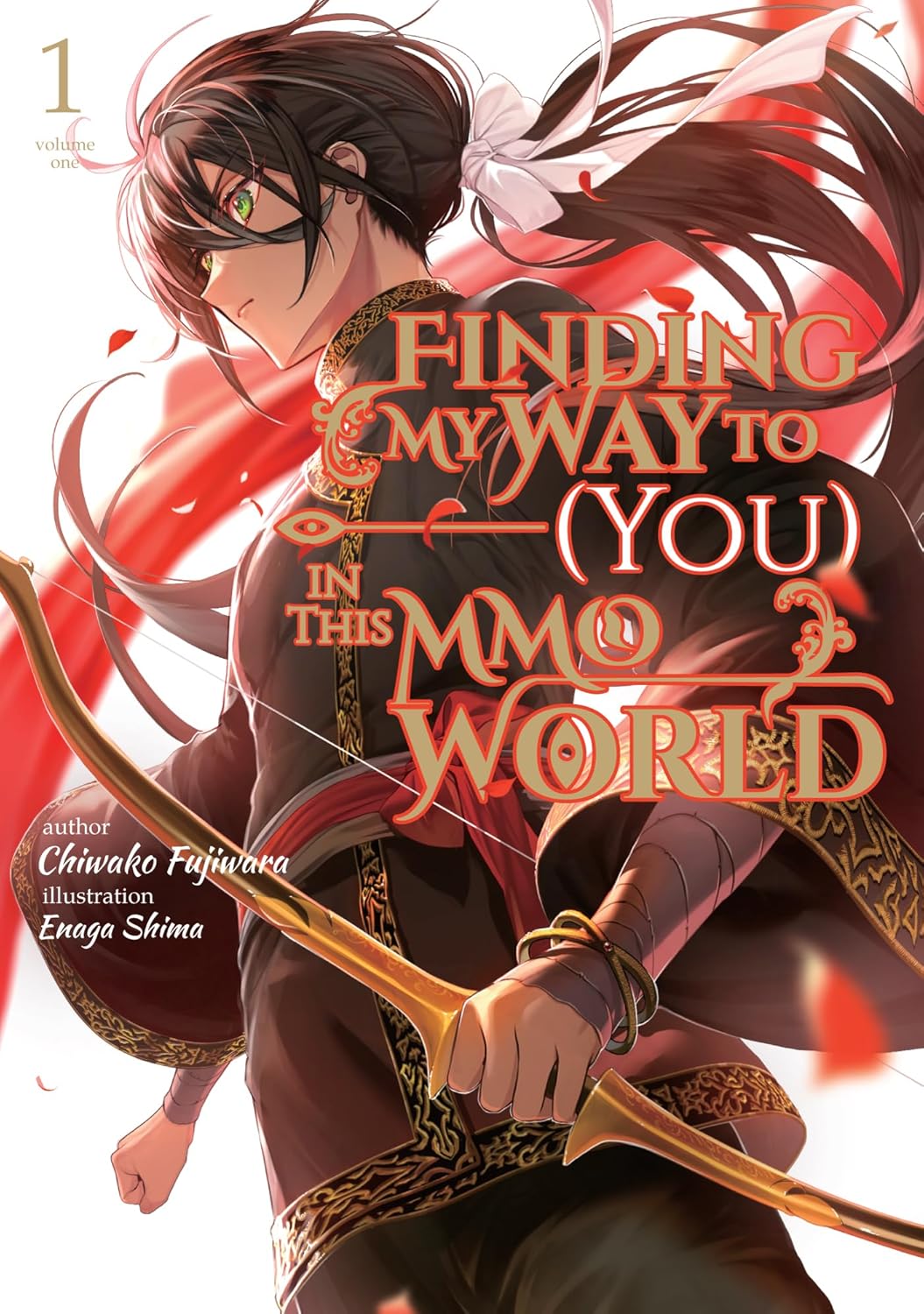
Posted by Elintiriel

For International Fanworks Day (IFD) 2026, we once again came together from all corners of the fandom cosmos, and celebrated an Alternate Universe-themed IFD! First, we ran our annual Feedback Fest, where we asked you all to recommend to each other fanworks around your favorite AUs. Fanlore hosted their annual IFD editing event from February 14-20, and we signal boosted several community events along with our own. Some of these are still on-going, so make sure to check out the post!

We also hosted chatrooms and games on our once-a-year IFD Discord server for 30 hours. Thanks to everyone who came by! You can check out the fruits of our collective labor–several fandom-themed poems, song lyrics, and stories–by visiting our collected IFD works on AO3.

We’d like to thank everyone who participated in our IFD activities and events, and give a huge shoutout to our OTW volunteers who modded chats and games! We hope to see you all again for IFD 2027!

[syndicated profile] mangabookshelf_feed

Posted by Sean Gaffney

By Heiseiowari and Noy. Released in Japan as “Tenseishitara Saikyou Shu-tachi ga Sumau Shima deshita. Kono Shima de Slow Life wo Tanoshimimasu” by SQEX Novel. Released in North America by J-Novel Club. Translated by Alex Castor.

The general theme of this book seems to be that everyone has a certain amount of stress in their lives, and that the best way to get rid of it is to totally relax in a place where your work can’t get to you. The two mages who were sent to check on Reina, and don’t really like her much, by the end of the book are just another part of the extended family being built up here. Of course, it helps when everyone on the island is so ludicrously powerful that there’s no point in stressing – you’ll just die if you don’t relax. Above everyone else is Arata, who gets annoyed every time someone implies he’s not human but by the end of the book is starting to get why they say it. As far as we can tell so far, he’s literally omnipotent. Even the vampire, who is able to take anyone else out no trouble, has issues dealing with him. He is OP Guy personified.

Arata and Reina have gotten completely settled in on this island (and are essentially acting like husband and wife, though his cluelessness and her shyness means they’re not really going much further than “we’re really good friends”). They’re also getting new visitors: as I noted above, two of Reina’s fellow mages wind up washed ashore on the island, and are quickly forced to get used to what life is like here. (Notably, they both specialize in an element and are jealous Reina can use all of them, while she’s jealous they’re really strong in one of them, calling herself a jack-of-all-trades.) We also meet the ancient dragons and ogres… or at least their teenage versions, who are fighting for supremacy but refuse to let Tailtiu join… not because she’s a girl, but because she’s too strong.

There’s a glorious scene midway through the book where, I thought at first, Arata had been yeeted to a completely different light novel to solve their problem and then yeeted right back. As it turns out that’s not true – while the Saint and the Hero were trying to summon someone to solve their problem, they exist in this world as well, and as it turns out Arata can solve the killer dragon problem but can’t help with church politics. I get the feeling we’ll see them again. I’m also not sure if this series is going to go polyamory, and if it does how many wives Arata will get. Reina is a given, of course, but Tailtiu, who is currently in the “little sister” role, does not look as if she’s prepared to stay there, especially as, once again, Arata solves all her personal issues by punching a few people till they understand. That said, give his “no, no, mustn’t have sexual thoughts about anybody” attitude, I doubt I need to worry for a while.

This is sort of a slow life series, even if the life is hanging around on what is basically the island where the gods live. I enjoy it.

[syndicated profile] mangabookshelf_feed

Posted by Michelle Smith

MICHELLE: As glad as I am to see a new volume of What Did You Eat Yesterday? coming out, it’s Hibana all the way, this week.

ASH: I’m definitely excited to see both of those releases this week, but after realizing Aki Shimizu created Hinatsugimura, I’m going to have to make that horror one-shot my pick. (I was always a little sad we didn’t get the final volumes of Qwan in English.)

SEAN: Yes, I’m picking a Tokyopop title. The winner for me this week is Ayaka is in Love with Hiroko!, because I love yuri with adults. Even if they both think it’s one-sided yuri.

ANNA: Sometimes you have to give it up for long running series – What Did You Eat Yesterday? is my pick this week.

KATE: While none of the new series piqued my interest, I’m excited for another installment of Hirayasumi, which manages to be funny and heartbreaking without lapsing into sentimentality.

[syndicated profile] henryjenkins_feed

Posted by Henry Jenkins

This contribution is an introduction to a series of forthcoming essays on genre and the ‘global shuffle’.


The auteur theory and genre analysis were the cornerstones of film studies in the United States. Film appreciation classes were added to the curriculum of many universities (and some high schools) in the 1960s and 1970s in response to two major developments: the emergence of New Wave movements around the world and the closing down of the studio era of production. One created excitement about what cinema could be and the other about what it had been. The contrast between the two meant that those early courses and the scholarship which grew out of them was bifurcated around the opposition between European art films and Hollywood genre films.

Genre was widely seen as a set of formulas that emerged from a factory mode of cultural production, ignoring the degree to which the New Wave directors they so admired had themselves been inspired to make movies because of the Hollywood films they watched at the Cinematique Francois; like the good fan filmmakers they were, many made films that appropriated and reworked their favorite films and directors: for example, Chabrol’s ongoing conversation with Alfred Hitchcock, Truffaut’s engagement with film noir and the western, and Godard’s focus on gangsters, science fiction, musicals, and so many other genres, to cite just a few. Their own criticisms stressed directors who were “at war with their materials” with genre understood primarily in terms of convention and authorship in terms of invention. Reading through early writings on genre theory, it is striking how much they seem hermetically sealed off so that there is no acknowledgement that genre films were emerging on an ongoing basis in every other major national cinema through popular films produced for their own markets and regional distribution.

By the time I entered film studies in the 1980s, film genre studies was undergoing a new burst of energy, thanks in part to Rick Altman and several cohorts of graduate students at the University of Iowa (a key reason why I went there to do my MA). As an undergraduate, I read and debated passionately what Robin Wood was publishing in Film Comment, reappraising a wide array of exploitation film genres. The rediscovery of Douglas Sirk, especially by the New German filmmakers, was resulting in a new fascination with Hollywood melodrama. Directors from Sam Peckinpah to Robert Altman to Mel Brooks made deeply revisionist contributions to these same genres teaching us new ways to read and engage with their conventions. And as I was starting to teach film, Quentin Tarantino was teaching us how to appreciate the treasures of the grindhouse cinema, while Todd Haynes, Cheryl Dunye, and Gregg Araki were queering genre with their works.

When a little more than a year ago I was invited to teach a course in film genre at the USC Cinema School, my first reaction was that I was born to teach a core class in American film genre. I had trained under Rick Altman, my passion for American cinema had grown out of reading and watching the revisionist works of the 1970s, I wrote my dissertation on film comedy, and I still passionately watched whatever genre films I could DVR off TCM. I could teach a class taking contemporary PhD students through the history of genre criticism and watch a mix of genre films – canonical and deep cuts, old and new.

But the more I thought about it, the more I realized that the next wave of important work in genre theory would be coming through an engagement with the global production and circulation of genre films, the mutual influence of genre across the planet.  And so, without even fully knowing what I might mean by it, I proposed teaching a course on “film genre in the age of the global shuffle”. Here’s the course description:

This course begins with the premise that streamers are shuffling our access to popular film and television from many corners of the world. Long term, how does this influence the stories cinema tells, for better or for worse, and how adequate is our current vocabulary of genre criticism for addressing the transcultural exchanges of genre elements this is producing?  I am looking for interesting cases that may signal something bigger happening within global popular cinema from cross-cultural and cross-genre hybrids (Thai westerns, Nordic noirs, Afrofuturist musicals) to nationally specific genres (Wuxia, Gallio, Masala). Here's our chance to play with genre theory, reading or rereading classic essays, and stretching them to the breaking point. Collectively, I hope we can make some real conceptual breakthroughs and produce a significant body of publications.

I had been thinking and writing about the “global shuffle” for some time. We are living in an era of global streaming platforms, which has shuffled who has access to popular films and television series in dramatic ways. As Netflix enters a new national market, part of the stipulation is that they will put a certain amount of money into local media production. In the past, the result would be “quota quickies,” but the new economics play out differently, since Netflix can recoup its costs easily by making the content they produce available through its platform world-wide. Our tendency is to think about Netflix as an agent of cultural imperialism that contribute to furthering American dominance and “monoculture”; to some degree this is true, but their own marketing needs pushe them to promote diversity (at least popularly accessible forms of diversity – that is, diversity within genres). 

As Joseph Dean Straubhaar, Swapnil Rai, Melissa Santillana and Silvia Dalben Swapnil Rai write, “global streaming companies like Netflix or Disney+ impose a degree of genre imperialism by suggesting the formats and themes that local companies should produce. The current process for co‑productions by streamers outside of the U.S. is not an open system in which local people produce what they want…. Netflix’s stated objective is to produce things that succeed locally, but also are very exportable globally” (2025, 121). The result is a form of hybrid media, riddled with contradictions, which often assumes the quality of universalism implied by this book’s account.

Having made such content, the streaming networks find it profitable to transport them elsewhere, making them available to consumers who would not have encountered them otherwise. As Michael Curtin writes: “after almost a century of American hegemony, the topographies of media industries are today growing more plastic and complicated as media institutions scale their ambitions and operations in an increasingly porous and dynamic environment” (2020, 90), and:

Remarkably, adaptations move “up” and “down” as well as “across.” That is, content and aesthetics not only circulate widely, they are also refashioned to address different topographies of imagination. And they create new topographies…. We are witnessing new patterns of interaction between media users and producers, as well as among users themselves. Once seen primarily as consumers, today viewers and fans amply express themselves in a variety of ways and media producers systematically monitor this discourse, creating feedback loops that shape story lines and characters. (97)

In this process, transcultural fans play a vital role in educating each other about the cultural traditions from which this content emerged and attracting new fan audiences to help sustain the content flow. Networked communication between fans enables contact across historically separated spheres of cultural influence as people forge shared identities together online.

A friend recently sent me a list of popular genre films from Korea, and I was able to find almost all of them, with English subtitles, somewhere in the streaming infrastructure, with many of them surfacing on Tubi, a bottom rung streamer that most of us can access for free. The more arty titles can be found on Criterion Channel, Mubi, Kino, or Kanopy; the more commercial ones on Prime, Netflix, or Max. Try looking at Netflix’s index by language at the number of films in Thai, Tagalong, Indonesian, Igbo or Arabic and compare that to how many films from those countries were showing on screens at the peak of  the Art House era. 

Older cinephile practices were based on scarcity but today’s challenges, and opportunities, grow out of plenitude. There’s so much out there but no one’s helping us sort through the pieces. Where do we go to identify key popular filmmakers in many of these countries, to understand local genres, to map the most creative and interesting titles? And that’s where new forms of film criticism, education, and scholarship are needed. These films are mainstream (in that they are widely accessible and build on genre), but niche (in that few of us know what’s out there or how to find it even if it is hiding in plain sight.)  What are the implications of these developments for how we understand film genre today?

It is no longer appropriate to discuss genre as if it were exclusively operating within the context of American entertainment. In fact, it never was.

I begin the class by focusing on the Western, the most American of film genres and therefore the one that was central to so much early film studies writing about genre. Yet the conventions of the literary western were as much shaped by German pulp writer Karl May as by American writers, such as James Fenimore Cooper or Louis L’Amour. May was one of the top-selling German writers of all time; his works have sold more than 200 million copies world-wide, and they have been ascribed in creating a market for stories set in the American west across Europe. There are still festivals and conventions based on May’s fictions held today. I shared this video from the New York Times about the sensitive issue of May’s romanticization and appropriation of Apache culture on the first day of class and it generated intense debate and discussion.

Gaston Melies (George’s brother) was dispatched to San Antonio to make Westerns for the French Star Films company in 1910 further fueling European fascination with the genre. Jean Renoir’s The Crime of M. Lange (1936) depicts labor politics at a French publishing house in the early 1930s which specializes in pulp magazines featuring Arizona Jim, an American cowboy. We might similarly trace the ways that the American Western has been shaped by – and in turn shaped – Asian filmmakers. The first film I showed the students was Martin Ritt’s The Outrage (1964), Akira Kurosowa’s Rashomon (1950), remade into a western featuring Paul Newman, Laurence Harvey, Claire Bloom, and Edward G. Robinson.

Of course, The Outrage is not the only Western based on Kurosawa’s films: The Magnificent Seven (1960) was a remake of Seven Samurai (1954); Sergio Leone’s A Fistful of Dollars (1964) was based on Yojimbo (1961), and so forth. Kurosawa, of course, would have been the first to acknowledge that his passion for John Ford westerns informed his approach to the Samurai films in the first place.

And we should note that Leone is simply the best known director to help shape the Spaghetti Western, a subgenre that emerged in the 1960s as Italian directors turned their attention to the genre. I also had students watch The Good, The Bad, and The Ugly (1966), to illustrate this phase of the genre’s history. Getting back to Asia, though, I also wanted to show them the Thai western, Tears of the Black Tiger (2000), a genre mixing sensation that merges Sirkian melodrama, singing cowboys, and popular south-east Asian conventions.

The deeper I dug, the more examples of the “Eastern Western” surfaced, many of them localizing the American western as staged by Leone and the other Spaghetti Western auteurs.

You can see trailers for some examples below.

 And around and around it goes; where it stops, nobody knows.

There are, after all, frontiers in many countries and thus, the Western story has resonances pretty much everywhere we look. More than one writer locates echoes of the Western in George Miller’s post-apocalyptic Australian epic, Mad Max 2 (US title: The Road Warrior) (1981). Óliver Laxe’s Sirât (2025) has been a film festival sensation this past year with his explorations of the rugged terrain of Southern Morocco, but might we consider his earlier work, Mimosas (2016), to also tap into and contribute back to the western tradition?  What about the Turkish film, Once Upon a Time in Anatollia (2011)?

Alongside these various examples of global westerns, I had students read anthropologist Mary Louise Pratt’s foundational essay, “Arts of the Contact Zone,” which explains, “Autoethnography, transculturation, critique, collaboration, bilingualism, mediation, parody, denunciation, imaginary dialogue, vernacular expression—these are some of the literate arts of the contact zone. Miscomprehension, incomprehension, dead letters, unread master pieces, absolute heterogeneity of meaning—these are some of the perils of writing in the contact zone” (1991, 37). This passage became a key reference point across the semester as we tried to understand the flow of genres across national boundaries.

Similarly, we found ourselves returning often to some important distinctions around genre-mixing made by Janet Staiger in her essay, “Hybrid or Inbreed: The Purity Thesis and Hollywood Genre History”:

My rejection of the hybridity thesis for post-Fordian Hollywood cinema is not a rejection of 1) the view that pattern mixing is occurring; or 2) the fact that Post-Fordian Hollywood cinema is producing hybrids both internally within the United States and externally throughout the world economy of signs. Internal hybrids would be examples of films created by minority or subordinated groups that use genre mixing or genre parody to engage dialogue with or criticize the dominant. Films by U.S. feminists, African-Americans, Hispanics, independents, the avant-garde, and so forth might be good cases of internal hybrids. (1997, 17)

 To fully understand the implications of Pratt and Staiger, we need to pay attention to the local particulars of media industries; the ways international film festivals functions as crossroads among auteurs; the interplay of local and global genre conventions; patterns of immigration; the geopolitical and economic histories of the regions involved; and the process of media consumption, among other things.

Another key influence on my thinking has been the idea of understanding genre as a reading hypothesis rather than a property of texts or their production. Reader-Response theorist Peter J. Rabinowitz becomes a key thinker here: “Genres can be viewed as strategies for reading. In other words, genres can be seen not only in the traditional way, as patterns or models that writers follow in constructing texts, but also from the other direction, as different bundles of rules that readers apply in construing texts” (1985, 420). Here, we might start with film noir, a “genre” (?) with much disputed boundaries, which is widely understood as having been first recognized by French critics and audiences when they saw a large backlog of American films in the post-war era and read them through the lens of their own pre-war Poetic Realism movement. The tell, of course, is that Film Noir is a French term – not one that would have been recognized by Hollywood who would have understood these films as crime movies, melodramas, thrillers, and a range of other genres.

As Noir has become such a widely recognized and marketable genre, we see the rediscovery and repackaging of 1940s and 1950s films from around the world as noirs. Witness the recent discovery of a noir movement in Argentina under Peron; in American-occupied Japan; among British filmmakers, each of which have been the theme of film packages on the Criterion Channel.

And the same is true of Neo-Noir films being consciously produced today which do situate themselves consciously in relation to encoded genre conventions.


So, there’s been a fascination of late with Nordic Noirs, although I would argue that these films from the ‘land of the midnight sun’ might better be described as Nordic Film Gris.

A program of recent Chinese Crime Thrillers on Criterion suggests that many mainland directors are consciously building on Nordic Noir traditions including setting their films in bleak, arctic, industrial and rural landscapes, with morally unsympathetic protagonists, brutally violent crimes, captured in extreme long takes. See for example Black Coal, Thin Ice (2014). Meanwhile, the concept of Nordic Noir is being traced backwards to the midcentury with a package of titles first offered at the Il Cinema Ritrovato in Bologna in Summer 2025 and then on Criterion Channel in early 2026.  What does it mean to read these films as film noir?

How might such interpretive strategies be applied to another genre being currently reassessed – the Italian giallo film, the subject of more and more DVD box sets – with which it shares a similar focus on crime and detection and morally suspect characters?  The Giallo is associated with its lurid use of color much as the Noir was with the use of Black and White cinematography, but the modern category of Neo-Noir starts to blur the distinctions between the two. And so it goes.

Across the semester, students watch films from some 20 different countries with clips from many more, as we talked through a broad array of genres, including many – such as Giallo, Masala, Wuxia, kaju, extreme cinema, etc. – which originated outside the Hollywood system, but which are key for understanding contemporary popular cinema. We began with the relationship between Rashomon and The Outrage, and we ended with Lady Snowblood and Kill Bill. In the days to come, we will share some of the student writing which emerged through thinking through some of these issues and engaging with some of these titles together.

Below I want to share with you the screenings and assigned readings from the class so that you might also choose to launch your own explorations of global genre films. As the assigned readings suggest, I am certainly not the only person asking questions about how genre operates on a global scale. I hope other film schools will offer such courses and film scholars will join me in trying to theorize what is happening in the age of the global shuffle and how it may accelerate cultural exchanges which run across the history of cinema.

References

Curtin, M. 2020. “Post Americana: Twenty-First Century Media Globalization,” Media industries 7.1: 89–109.

Pratt, ML. 1991. “Arts of the Contact Zone,” Profession: 33–40.

Rabinowitz, PJ. 1985. “The Turn of the Glass Key: Popular Fiction as Reading Strategy,” Critical Inquiry, 11.3: 418–431.

Staiger, J. 1997. “Hybrid or Inbred: The Purity Hypothesis and Hollywood Genre History,” Film Criticism, 22.1: 5–20.

Straubhaar, J. D., Rai, S., Santillana, M., & Dalben, S. 2025. Transnational Streaming Television: Reshaping Global Flows and Power. Routledge. https://doi.org/10.4324/9781003505525 


Week 1 Defining Genre - The Case of the Western

Screenings:

To be watched before the first class: The Outrage (Martin Ritt, 1964, USA; Based on Rashomon), Prime Video

If you have not already done so, also watch: Rashomon (Akira Kurosawa, 1950, Japan)

Winnetou – The Red Gentleman (Harald Reinll, 1964, Germany), YouTube 

In Class: Tears of the Black Tiger (Wisit Sasanatieng, 2000, Thailand), DVD

Readings:

Rick Altman, Chapter 2, Film Genre (Chapter 1 recommended)

Andrew Tudor, “Genre,” Edward Buscombe, “The Idea of Genre,” and Douglas Pye, “The Western (Genre and Movies),” Film Genre Reader IV

Barry Langford, “Who Needs Genres”

Matthew Freeman and Anthony N. Smith, “Why We Still Need Genres”

Resources:

Stuart Kaminsky, “The Samurai Film and the Western”

Erik R, Lofgren, “Adapting Female Agency: Rape in The Outrage and Rashomon

Robert Warshaw, “The Western”

Andre Bazin, “Evolution of the Western” 

Colleen Cook, “Germany’s Wild West Author: A Researcher’s Guide to Karl May”

Week 2 Genre Evolution

Screenings:

The Good, The Bad, and the Ugly (Sergio Leone, 1966, Italy, based on Yojimbo), Prime Video

Prey (Dan Trachtenberg, 2022, Comanche), Hulu

In Class: Return of an Adventurer (Moustapha Alassane, 1966, Niger)

Readings:

Altman, Film Genre, Chapter 4

Janet Staiger, “Hybrid or Inbred: The Purity Thesis and Hollywood Genre History,” John G. Cawelti, “Chinatown and Generic Transformation in Recent American Films,” Tag Gallagher, “Shoot Out in the Genre Coral: Problems in the ‘Evolution’ of the Western,” Film Genre Reader IV

Michael Curtin, “Post-Americana: Twenty-First Century Media Globalization”

Mary Louise Pratt, “Arts of the Contact Zone”

Jesus Jimenez-Varea and Milagros Exposito-Barea, “Tears of the Black Tiger: The Western and Thai Cinema”

Resources:

Ivo Ritzer, “Spaghetti Westerns and Asian Cinema: Perspectives on Global Cultural Flows”

Rachel Harrison, “‘Somewhere over the Rainbow’: Global Projections/Local Allusions in Tears of the Black Tiger

Thomas Klein, “Bounty Hunters, Yakuzas and Rōnins: Intercultural Transformations between the Italian Western and the Japanese Swordfight Film in the 1960s”

Christian Uva, “Sergio Leone’s Short Century”


Week 3 The Cases of Noir and Giallo

Screenings:

El Vampiro Negro (Román Viñoly Barreto, 1953, Argentina), YouTube

Death Walks at Midnight (Luciano Ercoli, 1972, Italy), Prime Video

Holy Spider (Ali Abassa, 2022, Iran), Netflix or Prime

Readings:

Altman, Film Genre, Chapter 9

Peter J. Rabinowitz, “The Turn of the Glass Key: Popular Fiction as Reading Strategy”

Paul Schrader, “Notes on Film Noir,” David Desser, “Global Noir: Genre Film in the Age of Transnationalism,” Film Genre Reader IV

Raymond Borde and Etienne Chaumeton, “Toward a Definition of Film Noir”

J. A. Place and L. S. Peterson, “Some Visual Motifs in Film Noir”

Alexia Kannas, “The Problem of Genre”

Carol Clover, “Her Body, Herself”

Resources:

Alexia Kannas, “The Italian Giallo”

David George and Gizella Meneses, “Argentine Cinema: From Noir to Neo-Noir”

Babak Tabarraee, “Iranian Cult Cinema”

Sabrina Barton, “Female Investigation and Male Performativity in the Woman’s Psychothriller”

Steve Neale, “Melodrama and Tears”              

Barry Langford, “Film Noir”


Week 4 Police Stories

Screenings:

Insomnia (Erik Skjoldbjærg, 1997, Norway), Prime Video

Elite Squad (Jose Padilha, 2007, Brazil), Prime Video or Tubi

Readings:

Altman, Film Genre, Chapter 6

Björn Ægir Norðfjörð, “Crime Up North: The Case of Norway, Finland and Iceland”

Luis M. García-Mainar, “Nordic Noir: The Broad Picture”

Paul Julian Smith, “Transnational Cinemas: The Cases of Mexico, Argentina and Brazil”

Resources:

Randall Johnson, “Post-Cinema Novo Brazilian Cinema”

David Bordwell, “Style without Style?,” Christopher Nolan, A Labyrinth of Linkages


Week 5 The Yakuza and the Triad

Screenings:

Ishi the Killer* (Takashi Miike, 2009, Japan), iTunes

*Please be forewarned this is an example of Extreme Cinema. It will be the most explicitly violent film of the term. Do not watch if you have trouble dealing with extreme gore and violence.

Triumph of the Warriors: Walled In (Soi Cheng, 2024, Hong Kong), Prime Video or YouTube

In Class: Creepy (Kiyoshi Kurosawa, 2016, Japan), Prime Video

Readings:

Altman, Film Genre, Chapter 8

Robert Warshow, “The Gangster as Tragic Hero”

Kate E. Taylor-Jones, “Miike Takashi: Welcome to the Dark Side”

Elayne Chaplin, “Death and Duty: The Onscreen Yakusa”

David Bordwell, “Aesthetics in Action: Kung Fu, Gunplay and Cinematic Expression,”

Valerie Soe, “Gangsta Gangsta: Hong Kong Triad Films, 1986-2015”

Resources:

Esther M. K. Cheung, Gina Marchetti and Tan See Kam, “From the New Wave to The Digital Frontier”

Caleb Kelso-Marsh, “East Asian Noir: Transnational Film Noir in Japan, Korea, and Hong Kong”

Gina Marchetti and Tan See Kam, “Hong Kong Cinema and Global Change”

Sun Yi, “Generic Involution and Artistic Concession in Contemporary Hong Kong Cinema: Overheard Trilogy and Beyond”

Cheuk-to Li, “Popular Cinema in Hong Kong”

Tony Williams, “Takashi Miike’s Cinema of Outrage”

Felicia J. Ruff, “The Laugh Factory?: Humor and Horror at Le theatre du Grand Guignol”


Week 6 Body Genres

Screenings:

Atlantics (Mari Diop, 2019, France/Senegal), Netflix

Train to Busan (Yeon Sang-ho, 2016, Korea), Prime Video

Readings:

Linda Williams, “Body Genres,” and Thomas Elsasser, “Tales of Sound and Fury: Observations on the Family Melodrama,” Film Genre Reader IV 

Tom Bordun, “Genre Trouble and Extreme Cinema”

Robin Wood, “An Introduction to the American Horror Film”

Bliss Cua Lim, “Generic Ghosts: Remaking the New ‘Asian Horror Film’”

Resources:

Ryan Gardener, “Storming off the Tracks: Zombies, High Speed Rail and South Korean Identity in Train to Busan”

Dal Young Jin, “Webtoon-Based Korean Films on Netflix”

Kevin Wynter, “An Introduction to the Continental Horror Film”

Hye Seung Chung and David Scott Diffrient, “South Korean Cinema’s Transnational Trajectories”

Will McKeown, “Self-Sacrifice in Train to Busan (2016)”


Week 7 Reimagining Kaju

Screenings:

Pacific Rim (Guillermo Del Toro, 2013, USA), Prime Video

Godzilla Minus One (Takashi Yamazaki 2023, Japan), Prime Video

Readings:

Jeffrey Jerome Cohen, “Monster Culture (Seven Theses)”

Noël Carroll, “Fantastic Biologies and the Structures of Horrific Imagery”

Steven Rawle, “Every Country Has a Monster”

Joyce E. Boss, “Hybridity and Negotiated Identity in Japanese Popular Culture”

Erin Suzuki, “Monsters from the Deep” 

Resources:

Steven Rawle, “National Films, Transnational Monsters”

Hye Seung Chung and David Scott Diffrient, “From Gojira to Goemul: ‘Host’ Cities and ‘Post’ Histories in East Asian Monster Movies”

Kristine Larsen, “Shattering Reality: Monsters from the Multiverse”

Donna Haraway, “The Promise of Monsters: Regenerative Politics for Inappropriate/d Others”

Anthony Lioi, “Of Swamp Dragons: Mud, Megalopolis, and a Future for Ecocriticism”

Steven Rawle, “Distributing Kaijū: Localisation and Exploitation”

Barack Kushner, “Gojira as Japan’s Postwar Media Event”


Week 8 Self-Reflexive Musicals

Screenings:

Moulin Rouge (Baz Luhrmann, 2001, Australia), Hulu

Neptune Frost  (Anisia Uzeyman, Saul Williams, 2021, Rwanda), Kanopy

Readings:

Rick Altman, “The American Film Musical as Dual-Focus Narrative” and “The Structure of the American Film Musical”

Jane Feuer, “The Self-Reflexive Musical and the Myth of Entertainment,” Film Genre Reader IV

Umberto Eco, “Casablanca: Cult Movies and Intertextual Collage”

Corey K. Creekmur and Linda Y. Mokdad, “Introduction”

Björn Norðfjörð, “The Postmodern Transnational Film Musical”

Richard Dyer, “Entertainment and Utopia”

Resources:

Rick Altman, “Reusable Packaging: Generic Products and the Recycling Process”

Aeron Gerow, “Japan”

Michael Lawrence, “India”


Week 9 The Action Film

Screenings:

RRR (S. S. Rajamouli, 2022, India), Netflix

Sisu (Jalmari Helander 2022 Finland), Prime Video

Readings:

David Bordwell, “The Bounds of Difference,” and “Formula, Form and Norm”

Barry Langford, “The Action Blockbuster”


Week 10 Performance and Genre

Screenings:

Jawan (Atlee, 2023, India), Netflix, YouTube

Polite Society (Nida Manzoor, 2023, UK), Prime Video

Readings:

Richard Dacordova, “Genre and Performance: An Overview,” and Yvonne Tasker, “The Family in Action,” Film Genre Reader IV

Rajinder Dudrah, Elke Mader and Bernhard Fuchs, “Introduction”

Rajinder Dudrah, “Unthinking SRK and Global Bollywood”

Ashish Rajadhhyaksha, “SRK, Cinema and the Citizen: Perils of a Digital Superhero”

Elke Meader, “Shah Rukh Khan, Participatory Audiences, and the Internet”


Week 11 The Global Superhero

Screenings:

The People’s Joker (Vera Drew, 2022, USA), Prime Video

Oya: Rise of the Orishas (Nosa Igbinedion, 2015, Nigeria), YouTube

Sanjay’s Super-Team (Sanjay Patel, 2015, US/India), Prime Video

How I Became a Superhero (Douglas Attal, 2020, France), Netflix

Readings:

Ellen Kirkpatrick, “Transformation ⇌ Representation ⇌ Worldmaking” and “‘I Am a Superhero’; or, A Casting Call (to Arms)”

Rayna Denison, Rachel Mizsei-Ward and Derek Johnson, “Introduction: Superheroes on World Screens”

Lizelle Bischoff, “‘They Have Made Africa Proud’: The Nollywood Star System in Nigeria and Beyond”

Charlie Michel, “Whose Lost Bullet? Netflix, Cultural Politics and the Branding of French Action Cinema”


Week 12 Genre and Ideology

Screenings:

The Act of Killing (Christine Cynn and Joshua Oppenheimer, 2012, Indonesia), Prime Video

El Conde (Pablo Larrain, 2023, Chile), Netflix

Readings:

Robin Wood, “Ideology, Genre, Auteur” and Barbara Klinger, “‘Cinema/Ideology/Criticism Revisited: The Progressive Genre,” Film Genre Reader IV

Stefan Iversen and Henrik Skov Nielsen, “The Politics of Fictionality in Documentary Form: The Act of Killing and The Ambassador”

Annette Hill, “Documentary Imaginary: Production and Audience Research of The Act of Killing and The Look of Silence”

Resources:

Oki Rahadianto Sutopo, “Using Bourdieu to Understand Perpetrators in The Act of Killing and The Look of Silence


Week 13 Wuxia Swordsmen and Ottoman Sultans

Screenings:

Battle of Empires (Faruk Aksoy, 2012, Turkey)

House of Flying Daggers (Zhang Yimou, 2004, China), Prime Video

Readings:

Ian Kinane, “The Wuxia Films of Zhang Yimou: A Genre in Transit”

Christina Klein, “Crouching Tiger, Hidden Dragon: A Diasporic Reading”

Stephen Teo, “Film Genre and Chinese Cinema: A Discourse of Film and Nation”

Resources:

Excerpts from Eve Sedgwick, Between Men: English Literature and Male Homosocial Desire

Michael Curtin, “Media Capital in Chinese Film and Television”

Stephen Teo, “Film Genre and Chinese Cinema: A Discourse of Film and Nation”


Week 14 Wrapping Up

Screenings:

Kill Bill (Quentin Tarentino, 2003/2004, USA), Amazon

Lady Snowblood (Toshiya Fujita, 1973, Japan), Prime Video

Readings:

Joseph Kupfer, “Woman Warriors Unite,” “No Muscles, No Splatter,” and “Hyper-Violence: The Thrill of Kill Bill”

Peter Hitchcock, “Niche Cinema, or Kill Bill with Shaolin Soccer”

Biography

Henry Jenkins is the Provost Professor of Communication, Journalism, Cinematic Arts and Education at the University of Southern California. He arrived at USC in Fall 2009 after spending more than a decade as the Director of the MIT Comparative Media Studies Program and the Peter de Florez Professor of Humanities. He is the author and/or editor of twenty books on various aspects of media and popular culture, including Textual Poachers: Television Fans and Participatory Culture, Hop on Pop: The Politics and Pleasures of Popular Culture, From Barbie to Mortal Kombat: Gender and Computer Games, Convergence Culture: Where Old and New Media Collide, Spreadable Media: Creating Meaning and Value in a Networked Culture, and By Any Media Necessary: The New Youth Activism. His most recent books are Participatory Culture: Interviews (based on material originally published on this blog), Popular Culture and the Civic Imagination: Case Studies of Creative Social Change, and Comics and Stuff. He is currently writing a book on changes in children’s culture and media during the post-World War II era.  He has written for Technology Review, Computer Games, Salon, and The Huffington Post.

[syndicated profile] mangabookshelf_feed

Posted by Sean Gaffney

By Rei Kazama and Fujiazuki. Released in Japan as “Tensei Reijō wa Seirei ni Aisarete Saikyō Desu…… Dakedo Futsū ni Koi Shitai)” by TO Books. Released in North America by J-Novel Heart. Translated by okaykei.

Last time I described the events in this series as being “a political hotbed”, and if anything I feel bad now for underselling it. I joked online that TO Books waylaid JNC after it had licensed Trials and Tribulations of My Next Life as a Noblewoman and sold them this series, like Sheldon Leonard’s tout trying to sell Jack Benny a horse. (Never let it be said I don’t provide modern references for the youth of today.) This book starts out with Deirdre and company getting involved in major rivalries, then moves to finding out that half those rivalries were not what they were told about at all, and ends in… well, I’ll talk about the last quarter or so of the book later. It’s absolute dynamite, though. The writer knows that light novels are drenched with 6-year-olds who talk like they’re middle-aged women, and so decides to weaponize it, with everyone not in her family seeing Deirdre as a terrifying creature.

Deirdre is six years old now, meaning her parents are finally letting her out of the house so that she can have destined encounters with dusky pretty boys… destined encounters that she totally ignores, of course. She’s also going around to various domains and trying to patch things up between the rulers and the royal spirits, who have made it perfectly clear that if they have to choose between destroying the entire nation and Deirdre, the nation will lose. Unfortunately, things are still very bad with the Empress and her family. What’s more, the faction that was supposedly opposing our heroine and her family… may not be after all? It turns out there’s another family in this race behind the scenes manipulating things. Oh, and there’s also an Evil Religion. It *is* a reincarnation book, after all.

Let’s talk about the last quarter of this book, which is when I started to compare it to T&T. It certainly racked up a hefty body count, and not the bodies that I was expecting. I had wondered whatever happened to the magical Wikipedia that Deirdre used in the first book, but it comes back with a vengeance here, as it’s a great way to summarize all of the backstabbing and manipulation that’s been happening to either keep the empress on the throne or get her off of it. Even Andrew, the closest thing in the Royal Family they have to an ally, doesn’t fully trust Deirdre and her family as they’re simply too powerful, too eccentric, and do not remotely care about power or the throne. Deirdre is here as a spirit guide. That said, she is quietly amassing a badass group of young girls who will presumably grow up to be a badass group of young women. Assuming they get to grow up.

The epilogue of this book shows us Deirdre about to turn ten, and I am assuming by the cover of the third book we’re headed off to the academy that always happens in these sorts of books. That said, I’m sure politics will not go away. Also, the thirteenth volume that just came out in Japan is the final one, so while we have a long way to go there’s at least an end point.

[syndicated profile] mangabookshelf_feed

Posted by Sean Gaffney

By Saka and Chorefuji. Released in Japan as “Aru Majo ga Shinu Made: Aokiumi ni Shukufuku no Kane wa Narihibiku” by DENGEKI no Shin Bungei. Released in North America by Yen On. Translated by Megan Turner.

When I reviewed the first book in this series, it was the only book in this series, and I wondered in the review if there would be any more of it. Since then, of course, we’ve had three more volumes (the fourth of which seems to be the final one). And an anime, which was not particularly popular here but was well received by the few who watched it. Fortunately, almost two years later, we finally have the second volume, with the third scheduled for the summer. Of course, I watched the anime as well, which leads to the problem that I broke one of my rules, which is “try not to watch an anime that passes where you’ve read”. This second volume contains the bulk of the back half of the anime, so folks who watched it know what’s going to happen. Fortunately, the story is still well-told, and honestly, we read this for Meg being a freakish gremlin in any case.

While technically not a short story volume, this book can be rather neatly divided into four sections. 1) Meg goes with Faust and Sophie to a giant witch convention that only happens every twenty years, and while there runs into a young girl who seems to be lost and also is more than she seems… and also a terrifying witch who has another bad prophecy for Meg. 2) Meg notices that a young girl… and later, her mother… have a dark mark on their necks that no one else can see. Faust says it’s a sign they’re going to be a sacrifice to Satan, and warns Meg not to get involved. Meg gets involved. 3) The huge tree in the town is overfloweing with magic and needs to be destroyed… but Meg has made friends with the spirit inside the tree, who is also getting corrupted. 4) After the events of Story 3, Meg has a broken leg, and goes to the city of Aquamarine to get treatment from a powerful medical witch. While there, she also learns about her past.

The first book was there to introduce us to Meg as a goofy little ball of energy who talks and acts like a dirty old man, has a big heart full of compassion, and seems to think she’s just an ordinary minor apprentice to a witch. This second volume is here to remind you that her master is possibly the second most powerful witch in the world, she’s best friends with the third most powerful, wants to intern with the fourth most powerful, and also is habitually achieving the impossible seemingly every single day, especially in the back half of the book. We see Meg basically invent her own magic here, twice, and most of it has to do with the fact that society has tried to math up magic to the point where it’s forgotten about the feelings. Since Meg is zero logic and all feelings, it’s no wonder she’s destroying all the common sense laws of how to cast spells.

This reads breezily, has a great main character voice, and some surprisingly dark horror within its pages. it’s a winner. Also, you can sing the title to the opening line of Secret Love by Doris Day.

[syndicated profile] otw_news_feed

Posted by Elintiriel

For anyone who’s missed our earlier posts, you can find all of our activities for this year’s International Fanworks Day in our “What We’re Doing For #IFD2026” post.

The OTW’s chatrooms and games session is a 30-hour party that lasts from February 14th, 21:00 UTC until February 16th, 03:00 UTC. The game times listed below are all in UTC, but you can click the links to find out how that converts to your own timezone.

The games will be hosted on our dedicated Discord server and moderated by OTW volunteers throughout the day. Every two hours you will be able to participate in a different fandom-themed game! The timetable and game descriptions are posted below; join us on Discord for the games you’d like to play!

NOTE: The games will be played and moderated in English.

Games Schedule:

February 14th

February 15th

February 16th

Game Guidelines

5 Things

How to Play: During this game, the host will name a topic and players in the room will call out examples from their favorite fandoms. This will repeat for at least 5 rounds. Be prepared to explain why your answer counts (maybe you’ll recruit someone new to your fandom!)

20 Questions

How to Play: During this game, the host will think of a person, place, or object. Players have exactly 20 yes-or-no questions they can ask the host to determine what the correct answer is.

Storytime

How to Play: The host will paste a starting sentence into the chat. Players take turns coming up with the next sentence–the host calling out whose turn it is–until everyone has gone once, and the story is complete!

List Builder

How to Play: List Builder is a collaborative game in which players work together to come up with a list of fandom characters or items belonging to a particular genre, starting with consecutive letters of the alphabet. Start at A and work your way through to Z (you can be as flexible as required on the difficult letters!)

Lyrics Round Robin

How to Play: During this game, we’ll collectively write FANDOM lyrics to replace those of a familiar song. The host will choose the song and type out an alternate first two lines. Then those in the room will write the next lines until the song is finished.

Poetry Round Robin

How to Play: During this game, we’ll collectively write FANDOM poetry! The host posts a poem as an example of a specific poetic form (like sonnet, haiku, etc.), as well as a title. The players then write one (or more) original poems of that form together, one line at a time.

OTW Trivia

How to Play: Like most trivia games, the host will ask a question and the first person to answer correctly wins that round. Because we’re online and you’re free to do searches we’re going to add another factor, which is time — you must answer within 2 minutes. But you can call out your answer as soon as you think you know. If you’re the first to have the correct answer, the host will type your name and award you a point. At the end of the game, whoever has gotten the most points will be named the winner!

Two Truths and a Lie

How to Play: The host will paste into the chat 3 statements. Because we’re online and you’re free to do searches we’re going to add another factor, which is time — you must answer within 30 seconds after the third statement!

We also want to hear from you about other celebrations taking place today. Leave us a comment here to tell us about what your fandom communities are doing!

[syndicated profile] mangabookshelf_feed

Posted by Sean Gaffney

By Matsuri Isora and Nanna Fujimi. Released in Japan as “Silent Witch: Another – Kekkai no Majutsushi no Nariagari” by Kadokawa Books. Released in North America by Yen On. Translated by Alice Prowse.

It can be difficult to review books that are tension-filled, well-written, and give fans of the series exactly what they want but have one particular thing that is not to the reviewer’s taste. This is that sort of book for me. I mentioned online that I hate amnesia plotlines, but that’s not quite true. I don’t mind, say, the reincarnated person having no memories of their time in Japan, that sort of thing. But it’s amnesia designed to break a couple apart and make them both upset that I don’t like, and that’s what we get here in spades. It’s handled very well, especially because, thanks to the vagaries of the plot, the two of them hadn’t seen each other in forever, and events conspired to make things suspicious. Throw amnesia on top of it, and you have a really good book that STRESSES ME OUT. Just fix it and get married, dammit.

A few years after the events of the first spinoff book, and Louis Miller has it made. He’s commander of the Magic Corps, well-respected for his barriers saving lives, has fought several dragons, he now looks and talks like a respectable gentleman, and he even has a nice house of his own. All he needs to do is become one of the Seven Sages. This is because Rosalie’s father has demanded that he fulfill all these conditions before he’ll let Louis marry her, and has, in fact not allowed them to make contact with each other all this time (something, it later turns out, he forgot he did, because as a dad he’s kind of awful). Fortunately, Rosalie’s father has to retire soon as his magic power is weakening, meaning there is a Sage opening available. Now all he has to do is duke it out with the guy from school who hates him more than anything in the world. Oh, and the other candidate. Who is… wait, who is this twitching creature?

Yes, fans of Monica can relax, because though the book doesn’t focus on her, she is in it, and gets a scene where she completely shows off why she’s a sage and why it happened so quickly. In the main series, Louis gets questioned about bullying Monica all the time, and mentions that he only bullies the strong. He’s clearly thinking of this, as she destroys both the other candidates. That said, a lot of Louis’ problems in this book are Louis’ own fault. He’s so obsessed with his goal, but only a few people know why he’s doing it, so everyone just assumed that he’s a terrible person… even Rosalie doubts him, when they meet after so long and he looks and sounds like a different person. And then she tumbles off a roof. I will also note that, aside from the actual bad guy, Glenn Dudley reminds us once more why he’s such a giant pain in the ass. I respect Louis for not murdering him.

Not to spoil an obvious thing, but things do work out and they both live happily ever after. So next time we get back to Monica’s present-day adventures… whenever that is, as Book 8 isn’t scheduled yet. Fans of the series who don’t get very stressed about amnesia ruining true love should love this.

Manga the Week of 2/18/26

Feb. 14th, 2026 12:15 am
[syndicated profile] mangabookshelf_feed

Posted by Sean Gaffney

SEAN: It’s February, read manga. It will get you through February.

ASH: Thank you, manga, for your unwavering support.

SEAN: Airship has the print debut of Magical Buffs: The Support Caster is Stronger Than He Realized! (Zatsuyou Fuyojutsushi ga Jibun no Saikyou ni Kidzuku Made), which starts as a “thrown out of the party for having support magic” title, but at least this guy has a childhood friend to help him realize he’s actually awesome.

ASH: It’s always good to have a childhood friend who has your back.

SEAN: Also in print: Witch and Mercenary 5.

Digitally, we get two debuts. I Wish I Could Meet You Again on the Hill Where That Flower Blooms (Ano Hana ga Saku Oka de Kimi to Mata Deaetara) is a one-shot light novel in the genre of “tragic yet heartwarming movie about teenagers and time travel that gets made into a movie”. A genre Airship has so many of.

ANNA: It sounds wistful, I wonder if it is wistful.

ASH: It does though, doesn’t it? And I do tend to enjoy this particular genre.

SEAN: Magic Maker: How to Create Magic in Another World (Magic Maker: Isekai Mahou no Tsukurikata) is an ongoing light novel in the genre of “I am reincarnated into a fantasy world and proceed to revolutionize it as a young child because I am so amazing”. A genre ALL publishers have so many of.

Dark Horse Manga has the first omnibus of Gunsmith Cats Burst, the sequel to the classic manga that assumes that what fans really want is more Bean Bandit.

ASH: Aww, beans.

SEAN: Ghost Ship gives us 2.5 Dimensional Seduction 17 and Creature Girls: A Hands-On Field Journal in Another World 14.

Hanashi Media has stopped putting everything in the last week of the month, so we got I Got Reincarnated as a Cultist Mob in an Eroge Full of Maniacs with Death Wishes 3 this week, and next week we get The Abandoned Reincarnation Sage 3.

Ize Press debuts The Merman Trapped in My Lake. A girl finds her ancestor trapped the titular merman in the titular lake. The girl is named after this ancestor, and looks just like her, but surely that won’t lead to trouble.

ASH: When has it ever? (This does sound like something I would read…)

SEAN: Also from Ize Press: Kill the Villainess 5, Lady Devil 4, Murderous Lewellyn’s Candlelit Dinner 4, See You in My 19th Life 9, and Semantic Error 5.

J-Novel Club’s one debut is in their Knight imprint. Finding My Way to (You) in This MMO World (Game no Sekai ni Tenseishita Ore ga ** ni Naru made) has a boy setting out to make his fortune – then getting conscripted – suddenly remember his past life from another world! What’s more, he’s got to guard the princess… who’s a prince in disguise! If you like the same old light novel plots but wished they were gayer, this is for you.

ASH: I mean, it surely can’t hurt.

SEAN: Other JNC light novels: The Fearsome Witch Teaches in Another World 2, Holmes of Kyoto 21, In Another World with Household Spells 4, The Invincible Little Lady 7, Lady Bumpkin and Her Lord Villain 6, A Late-Start Tamer’s Laid-Back Life 14, and Private Tutor to the Duke’s Daughter 19.

Other JNC manga: Flung into a New World? Time to Lift the 200-Year Curse! 5, The Frontier Lord Begins with Zero Subjects 12, Housekeeping Mage from Another World 9, and Scooped Up by an S-Rank Adventurer! 3.

Kodansha’s print debut is Love at First Memory (Ore to Mou Ichido, Hatsukoi), a Nakayoshi manga about an heiress who finally decides which of her suitors she loves… then she gets amnesia in an car accident, and they all insist they were the one she picked! This is from the author of Boss Bride Days and Springtime with Ninjas.

MICHELLE: I can only assume that wacky hijinks ensue.

ANNA: Sometimes I’m in the mood for wacky hijinks.

ASH: Wacky hijinks can be healing.

SEAN: There’s also The Ghost in the Shell Legacy Edition Manga Box Set, a big box of all the GITS titles uncensored (yes, they have THOSE pages).

ASH: Goodness!

SEAN: Also in print: Blue Lock 27, Go! Go! Loser Ranger! 16, Parasyte Paperback Collection 3, Tying the Knot with an Amagami Sister 14, Welcome to Demon School! Iruma-kun: IruMafia Edition 3, and What Did You Eat Yesterday? 23.

MICHELLE: Oh! I didn’t realize there was a new volume of What Did You Eat Yesterday?!

ANNA: Woah!!!!

ASH: Oh! I was somehow unaware.

SEAN: And digitally, we see A Couple of Cuckoos 27, Forest of Piano 11 through 18 (the final volume, and these are the first new translated volumes since 2019), Hozuki’s Coolheadedness 29, My Boyfriend in Orange 15, Sayabito: Swords of Destiny 7, and That Beauty is a Tramp 7.

One Peace Books has a 5th volume of Hero Without a Class.

Seven Seas time. For danmei, the big release (literally) is The Scum Villain’s Self-Saving System: Ren Zha Fanpai Zijiu Xitong Box Set, a deluxe hardcover version of Bakarina: danmei edition. There’s also a mini-artbook and mini-posters.

ASH: That is a sizeable release!

SEAN: For other titles, we see Get Married So I Can Curse Your Firstborn and Finally Be Free! (7-dai Tatarimasu node Hayaku Kekkonshite Kudasai!), a Monthly! Spirits series about a vengeful god trying to unvengeful herself by cursing seven generations of a family. Unfortunately for her, the 6th one is so unpopular there may not BE a 7th!

ASH: Whoops.

SEAN: Grim Night Tales (Endan Yobanashi) is a Sunday Web Every series that is basically an anthology of horror short manga.

ASH: A horror manga anthology, you say?

SEAN: Hibana is a BL manga from the creator of Classmates. A girl finds that her boyfriend is falling for another guy… and getting far too obsessed with him. This comes from Magazine Be x Boy, and is done in one.

MICHELLE: Oooooh. I have heard great things about Classmates.

ASH: Classmates is excellent. Granted, I generally tend to enjoy Asumiko Nakamura’s work.

SEAN: Also from Seven Seas: The Greatest Wolf of My Life 2, The Lady Knight and the Beast-Eared Child 5, My Dear Detective: Mitsuko’s Case Files 5, My Kitten is a Picky Eater 7, Only I Know the World Is Ending and Getting Killed by Rampaging Beasts Only Makes Me Stronger 4, This Is Screwed Up, but I Was Reincarnated as a GIRL in Another World! 18, The Too-Perfect Saint 5, The Valiant Must Fall 6, and The World’s Fastest Level-Up 7.

Square Enix Manga gives us Dragon and Chameleon 6, Mr. Villain’s Day Off 7, and Wash It All Away 6.

Steamship has a 5th volume of Loving Moon Dog and a 5th volume of The Villainess and the Demon Knight light novel.

Titan debuts Gizmo Riser, a MAGCOMI series about a slave who inherits some amazing gloves from his uncle so he can destroy the state.

ASH: I wish him well.

SEAN: Lots from Tokyopop. Ayaka is in Love with Hiroko! (Ayaka-chan wa Hiroko-senpai ni Koishiteru) is a Web Action yuri manga about two women who are completely in love with each other, but absolutely think the other one is straight.

Destiny Paradise Night is a one-shot BL manga from Honey Milk. A guy dumped by his girlfriend saves someone from jumping off a bridge… only he wasn’t really. Also, he’s a sexy idol.

EX-Rank Lover: My Doting Ex-Boyfriend Wants to Make Love to Me Again and Again! (Dekiai Moto Kare wa Saikai H de Torotoro ni Aishi Tsukushitai – Amayakashi Jouzu na Nikushoku Gokujou Teku ni Oborete) is a josei one-shot from LoveParfait. A receptionist finds that the new employee at her office is her ex from high school… and he’s really hot now and wants to get back together!

Tokyopop also has Formerly, the Fallen Daughter of the Duke 7 and Reincarnated in a Mafia Dating Sim 3.

Viz Manga debuts Centuria, a dark fantasy from Shonen Jump +. A stowaway on a slave ship gets powers from the gods of the sea, and that’s where his troubles begin.

ANNA: I’m a little curious!

ASH: Likewise!

SEAN: Also from Viz: Assassin’s Creed: Forgotten Temple 2, Choujin X 11, Hirayasumi 8, Hunter x Hunter 3-in-1 5, Jujutsu Kaisen 29, Kingdom 4, Mission: Yozakura Family 21, Snowball Earth 8, Steel of the Celestial Shadow 9, and Ultraman 21.

Yen Press debuts Hinatsugimura, a one-shot horror manga from Nemuki +. A group of travelers wait out a storm in a mansion. That ALWAYS goes well.

MICHELLE: It might be a trope, but sounds kind fun nonetheless.

ASH: Yup. I’d read that.

SEAN: Also from Yen, No Matter How I Look at It, It’s You Guys’ Fault I’m Not Popular! 26.

ASH: I’m out of touch and didn’t realize that was still running!

SEAN: Don’t use manga for firewood! Read it!

Profile

peppermintfables: Jiang Cheng from Mo Dao Zu Shi in the outfit of a Knight of Blood from Homestuck (Default)
peppermintfables

December 2025

S M T W T F S
 123456
78910111213
14151617 181920
21222324252627
28293031   

Page Summary

Style Credit

Expand Cut Tags

No cut tags
Page generated Feb. 23rd, 2026 05:27 pm
Powered by Dreamwidth Studios